Left / Right (mouse or keys): Position dropping character
Click / Release: Drop character into field
High Score Tips
Study the character order reference before playing — understanding which character merges into which is the foundational knowledge the game is built on. A few seconds reading the order above the score box before your first drop pays back immediately in better placement decisions.
Work from one side of the field — placing characters consistently on one side rather than distributing them across the full field creates denser contact opportunities for merges. Spread-out placement produces characters that can't reach identical partners.
Prioritize clearing small characters — small, unmerged characters accumulate quickly and fill field space without contributing to high-tier merges. Actively routing new drops to merge with existing small characters clears them before they build up into an unmanageable pile.
Brainrot Merge
Play Brainrot Merge online free at racing-limits.io. Jump into instant browser gameplay with no downloads.
Brainrot Merge is a puzzle merge game that collides two distinct pleasures: the satisfying chain-reaction logic of a merge puzzle and the recognition delight of the Italian Brainrot character universe. Drop characters into the play field, pair identical ones to merge them into the next tier, and keep the field clear enough to continue the chain. The merge mechanic is immediately familiar to anyone who has played Suika Game or its variants; the content is entirely its own — approximately 50 characters drawn from the Brainrot universe, from Tralalero Tralala and Tung Tung Tung Sahur to Chimpanzini Bananini and Capuchino Assassino.
The game's depth emerges from the tension between two competing pressures: the desire to create merge chains as efficiently as possible, and the necessity of keeping the play field clear enough to continue placing new characters. Merges create larger characters. Larger characters take more space. Characters take up all available space and the game ends. This space management challenge beneath the merge puzzle creates a strategic layer that goes significantly deeper than a simple pattern-matching game — where you place characters relative to each other, and when you prioritize space maintenance over chain optimization, determines how far each session extends.
For players already immersed in Brainrot internet culture, seeing Tralalero Tralala merge into a more elaborate form — and discovering what fifty total characters look like in progression — is a specific joy that the game delivers with genuine affection for its source material. For players unfamiliar with Brainrot, the merge mechanics stand completely independently as an engaging puzzle game whose characters happen to be surreal and funny. Brainrot Merge works as both a fandom game and a genuinely solid merge puzzle — an achievement that adaptations of internet phenomena don't always manage.
Key Details:
Genre:
Merge Puzzle / Casual
Difficulty Level:
Easy to start, Medium at advanced play
Average Play Time:
10–20 minutes per session
Best For:
Fans of Brainrot internet culture, players who enjoy merge puzzle games (Suika Game variants), and casual puzzle enthusiasts
How to Play Brainrot Merge?
Getting Started:
Characters drop from the top of the play field — position them using left/right input before releasing to place them.
When two identical characters land in contact with each other, they merge into the next tier character automatically.
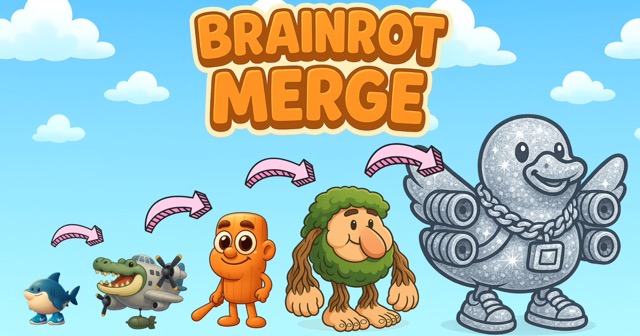
The merge character order is displayed above the Score box — reference it to understand which character comes next in each merge chain.
Actively manage the field's available space — prioritize merges that clear small characters to maintain room for new drops.
The game ends when there is no remaining space for new characters to be placed — maximize your score by keeping the field clear as long as possible.
Basic Controls:
Input
Action
Left / Right (mouse or keys)
Position dropping character
Click / Release
Drop character into field
Objective: Merge identical Brainrot characters to create higher-tier characters, score points, and discover the full ~50-character merge progression. Keep the play field clear enough to continue placing new characters — the game ends when no space remains for new drops.
Brainrot Merge Game Features & Highlights
~50 Brainrot characters — Tralalero Tralala, Tung Tung Tung Sahur, Chimpanzini Bananini, Capuchino Assassino, and approximately 46 more across the merge progression
Chain merge mechanic — consecutive merges triggered by a single drop create chain reactions that score significantly more than individual merges
Character progression reference — the merge order display above the score box provides a visual guide to the next tier for each character
Space management challenge — field capacity is finite; strategic placement is as important as merge creation for extending session length
Suika-style physics — characters settle realistically after landing, creating organic stacking configurations that reward placement planning
Brainrot Merge Tips & Strategies
Beginner Tips:
Study the character order reference before playing — understanding which character merges into which is the foundational knowledge the game is built on. A few seconds reading the order above the score box before your first drop pays back immediately in better placement decisions.
Work from one side of the field — placing characters consistently on one side rather than distributing them across the full field creates denser contact opportunities for merges. Spread-out placement produces characters that can't reach identical partners.
Prioritize clearing small characters — small, unmerged characters accumulate quickly and fill field space without contributing to high-tier merges. Actively routing new drops to merge with existing small characters clears them before they build up into an unmanageable pile.
Advanced Strategies:
Set up chain drops — a chain occurs when a merge creates a character that lands on an identical character, triggering another merge, which triggers another. Setting up these chains requires reading the field for potential chain positions before dropping — drop one character that merges at position A, creating a character that drops onto an identical character at position B, creating another character that drops onto position C. Planned chain drops produce significantly higher scores per drop than single merges.
Keep the center clear — characters dropped into a packed center have no lateral room to slide into merge positions. Maintaining clearance in the field's center allows more flexibility in where each new character settles, which improves the probability of accidental merge contacts alongside your planned ones.
Delay high-tier drops when the field is full — when your field is crowded, a large character drop that doesn't immediately merge worsens the space crisis significantly. Wait for a merge that clears mid-field space before placing your largest available character.
What to Watch Out For:
Gaps between same characters that can't merge — two identical characters separated by a third character cannot merge without that separator being cleared first. Identify these blocked merge pairs early and prioritize clearing the separator before the field fills further — a blocked merge that remains blocked is space wasted on characters that aren't creating value.
Field edges trapping small characters — small characters that settle against field edges in positions where no identical character can reach them become permanent field occupants until cleared by a merge from the same tier that happens to land nearby. Avoid deliberately dropping toward edges unless a merge opportunity exists there.
Brainrot Merge Game Elements Explained
Merge Progression System: The merge progression is the game's primary discovery mechanic and the element that creates its longest-term engagement. Starting from the smallest Brainrot characters — easily merged in pairs from the opening drops — the chain extends through approximately 50 distinct character tiers, each merge creating a new, larger, more elaborate design that players familiar with Brainrot culture will recognize and react to with specific delight. The character order reference displayed above the score box provides the full merge map, allowing players to plan several merges ahead rather than being surprised by each new character's appearance. Understanding the progression well enough to recognize which merges are two or three steps away from a high-tier character — and working toward them deliberately — is the strategic skill that produces the highest scoring sessions. Each new character tier also creates a natural milestone that marks meaningful progress through the ~50-character collection.
Space Management System: Space management is the strategic pressure that prevents Brainrot Merge from being a purely optimistic game of creating the best chain possible. Every merge creates a larger character; every larger character occupies more field space; field space is finite. The game ends not when you run out of ideas but when you run out of room. This creates a constant tension between the desire to pursue high-value chain merges — which require positioning characters near each other in ways that temporarily increase field density — and the necessity of keeping enough field space clear to continue placing new drops. Players who focus entirely on creating chains without monitoring field density run out of space before their chains reach the highest tiers. Players who focus entirely on field management at the expense of merge creation score too little to maintain meaningful session length. The balance between these priorities is the skill that determines session quality.
Character Universe: The ~50 Brainrot characters in Brainrot Merge are drawn from the Italian Brainrot internet phenomenon — a genre of surreal AI-generated and viral content featuring characters that combine animal and human features with absurd names and appearances. Tralalero Tralala, the first character and lowest merge tier, is one of the most widely recognized figures in the Brainrot universe. Tung Tung Tung Sahur — also the subject of Tung Sahur Clicker — appears as a mid-progression character. Chimpanzini Bananini, Capuchino Assassino, and dozens of others represent the full breadth of the character universe's absurdist design. For players already immersed in Brainrot culture, the merge progression becomes a collection journey through characters they've previously encountered, each merge a reunion with a familiar face. For new players, the character designs are genuinely amusing on their own terms — surreal enough to be visually interesting regardless of cultural context.
Brainrot Merge Frequently Asked Questions
Q: How do I merge characters in Brainrot Merge? A: Drop two identical characters so they land in contact with each other — the merge happens automatically on contact. Position your dropping character above or adjacent to an identical character already in the field. The merged result drops to wherever it settles after the merge animation completes.
Q: What should I do if the field is filling up too fast? A: Immediately switch to a field-clearing strategy: drop new characters specifically onto existing characters of the same tier to merge and eliminate them, rather than finding new positions for them. Target your smallest, most abundant characters first — clearing multiple small characters creates proportionally more space than clearing one large one.
Q: How many characters are in the merge progression? A: Brainrot Merge features approximately 50 characters across the full merge progression, from the smallest starting tiers to the highest achievable merge results. The character order reference above the score box displays the full sequence.
Q: Is Brainrot Merge compatible with mobile devices? A: Brainrot Merge supports touch-based character placement on mobile browsers — tap to select the drop position and release to drop. The game's drop-and-merge mechanic translates naturally to touchscreen input.
Q: What is a chain merge and how do I create one? A: A chain merge occurs when a merge creates a new character that immediately lands on an identical character, triggering another merge, which may trigger another, and so on. To set one up, look for positions where a completed merge would land its result directly onto or adjacent to a matching character. The order reference above the score box helps you predict what a merge will produce and where it will land.

 Drift Frenzy
 Drift Rush
 Arcade Glide
 Track Dash
 Retro Rush
 Escape Road 3
 Wave Rider
 Traffic Road
 Escape Road City 2
 Bike Xtreme
 Escape Road 2
 Traffic Rally
 Tap Drift
 Drive Mad
 Wheelie Master
 Wheelie Party
 Moto X3M
 Street Wheelie
 Car Chaos
 Escape Drive
 Blocky Rider
 Mad Pursuit
 Mad Racers
 Chase Rush
 Smashy Road
 Driftio
 Night City Racing
 Hill Climb Racing
 Drift Hunters
 Smash Karts
 GT Cars Mega Ramps
 Motorcycle Racer Road Mayhem
 Funny Mad Racing