Release at the highest point of your forward arc — the top of the forward swing is where your horizontal momentum is highest. Releasing here sends the stickman forward with the most speed. Releasing earlier sends you up but slows horizontal progress; releasing later sends you backward. Practice feeling the top of the arc before trying to optimize for specific anchor positions.
Look at the next anchor while swinging, not at the stickman — your rope throw decision needs to be ready before you release, not after. Identifying the next anchor's position during the current swing allows you to plan your release and throw direction simultaneously.
Don't force long swings over short throws — when an anchor is directly above or slightly ahead, a short throw and quick release is faster than swinging to maximum arc. Calibrate your swing length to the actual distance needed rather than always aiming for the widest possible arc.
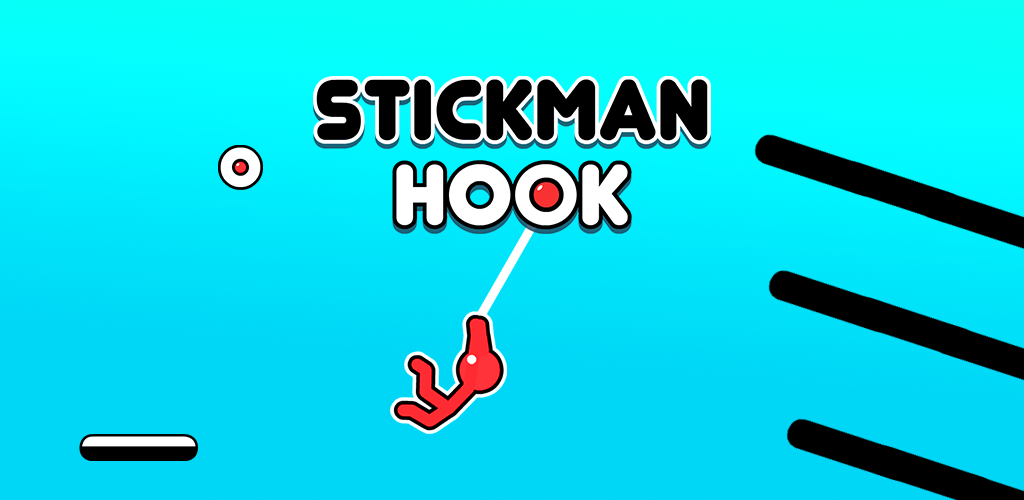
Stickman Hook
Play Stickman Hook online free at racing-limits.io. Jump into instant browser gameplay with no downloads.
Stickman Hook is a physics-based rope swinging game that turns aerial momentum management into one of the most satisfying movement systems in browser gaming. Your stickman doesn't run or jump — he throws a rope, catches an anchor point above him, swings through the arc of the rope's pendulum, releases at the optimal moment, and immediately throws again to catch the next anchor. Done well, the resulting motion is fluid, graceful, and surprisingly fast. Done poorly, you swing into a wall or fall short of the next anchor and restart the level.
The game's genius is in what it asks you to optimize: not button-mashing speed, not memorized patterns, but an understanding of momentum and swing timing that feels physically intuitive once it develops. Releasing at the top of the arc sends you forward at maximum speed; releasing early keeps you lower but trades speed for precision; releasing late sends you backward. The anchor points' irregular spacing ensures that no single release timing strategy works everywhere — each level requires fresh reading of the available points and fresh judgment about when the current swing's momentum is best applied toward the next one.
Bounce pads add a second unpredictable force to the pendulum movement: landing on one sends the stickman flying in ways that can either accelerate progress dramatically or create control situations that require quick rope-throw decisions. Managing bounce pad interactions — using them as free height gain when well-positioned, avoiding them when they'd disrupt a carefully built swing rhythm — is the mid-to-advanced skill that separates clean level completions from chaotic ones. With over 100 levels and one of the most extensive skin collections in the browser stickman genre — including a fire dragon, hamburger, cactus, ninja, and lemon in sunglasses — Stickman Hook is a physics game that earns every return visit.
Key Details:
Genre:
Physics Platformer / Skill Game
Difficulty Level:
Easy start, Hard in later levels
Average Play Time:
10–20 minutes per session
Best For:
Players who enjoy physics-based skill games with momentum management, creative level design, and large skin collections
How to Play Stickman Hook?
Getting Started:
Tap or click to throw the stickman's rope toward the nearest anchor point above and ahead of him — the rope catches automatically when aimed correctly.
The stickman swings on the rope in a pendulum arc — observe the arc and plan your release point based on where the next anchor is positioned.
Release the rope at the optimal moment of your swing to carry maximum momentum toward the next anchor point.
Throw the rope again immediately on release to catch the next anchor and continue your aerial movement toward the finish.
When bounce pads appear in your path, anticipate how they'll affect your trajectory and adjust your rope throw timing accordingly.
Basic Controls:
Input
Action
Tap / Click
Throw rope (catch nearest anchor)
Release
Let go of rope
Objective: Reach the finish line of each level by swinging between anchor points using rope throws and releases timed to carry maximum momentum. Navigate bounce pads, irregular anchor spacing, and increasing level complexity across the full level progression.
Stickman Hook Game Features & Highlights
Pendulum physics rope system — momentum-based swinging that rewards timing and release angle over button speed
Irregular anchor spacing — each level's unique anchor layout requires fresh reading of optimal swing timing rather than repeating a fixed technique
Bounce pad mechanic — unpredictable trajectory-altering elements that can accelerate or disrupt swing rhythm depending on position and timing
Extensive skin collection — fire dragon, hamburger, cactus, ninja, lemon in sunglasses, and many more, unlocking at level milestones or through video watches
Progressive level difficulty — 100+ levels that consistently introduce new spatial challenges without repeating the same anchor layouts
Stickman Hook Tips & Strategies
Beginner Tips:
Release at the highest point of your forward arc — the top of the forward swing is where your horizontal momentum is highest. Releasing here sends the stickman forward with the most speed. Releasing earlier sends you up but slows horizontal progress; releasing later sends you backward. Practice feeling the top of the arc before trying to optimize for specific anchor positions.
Look at the next anchor while swinging, not at the stickman — your rope throw decision needs to be ready before you release, not after. Identifying the next anchor's position during the current swing allows you to plan your release and throw direction simultaneously.
Don't force long swings over short throws — when an anchor is directly above or slightly ahead, a short throw and quick release is faster than swinging to maximum arc. Calibrate your swing length to the actual distance needed rather than always aiming for the widest possible arc.
Advanced Strategies:
Use bounce pads as momentum amplifiers when positioned correctly — a bounce pad hit at the right angle during an existing swing arc can send the stickman significantly further than the current rope swing would reach naturally. Identifying which bounce pads are positioned to amplify your current trajectory — rather than disrupt it — turns them from hazards into free momentum boosts.
In levels with irregular anchor clusters, plan two anchors ahead — some level sections place anchors in configurations where the optimal path through the cluster isn't the nearest anchor each time, but a specific sequence that sets up a better approach to the section exit. Reading two anchors ahead rather than one gives you enough lead time to choose the optimal sequence.
Momentum preservation between throws — the speed you carry at rope release translates directly into the distance your next throw must cover. A fast release that requires a long throw to the next anchor is sometimes slower than a slightly slower release that leaves you closer to the next anchor with a shorter throw. Optimize the total throw-swing-release cycle, not just individual release timing.
What to Watch Out For:
Bounce pads near walls — a bounce pad hit that sends the stickman into a wall terminates the swing chain and often restarts the level. Identify wall proximity before committing to a bounce pad interaction — pads that would send you into a wall at your current angle are avoidance targets, not momentum tools.
Anchor points above and behind current position — not all anchor points in Stickman Hook are forward-positioned. Some levels place anchors above and behind the stickman's current position, which require a backward rope throw that briefly reverses direction. Recognizing these backward anchors as intentional level design (rather than missed forward anchors) is the key to navigating levels that seem to have no forward path.
Stickman Hook Game Elements Explained
Rope & Pendulum Physics: The rope swing system in Stickman Hook is built on physical pendulum mechanics that respond to your throw angle and release timing in ways that feel genuinely physical rather than abstracted. When the stickman catches an anchor point, he swings on the rope in an arc determined by the angle between his current position and the anchor — a higher, directly-above anchor creates a shorter, faster pendulum; a lower, angled anchor creates a longer, wider swing. The stickman's speed through the arc depends on gravity and momentum: he accelerates toward the lowest point of the arc and decelerates upward toward the extremes. The release timing decision is made against this speed profile — releasing at the lowest point sends you primarily downward with high horizontal speed; releasing at the forward extreme sends you forward but with less speed; releasing just before the extreme sends you forward with near-maximum momentum and a slightly lower launch angle that often provides the best balance of speed and distance. Developing an instinctive feel for where this optimal release point is in each specific anchor configuration is the central skill the game develops.
Anchor Layout Design: Each of Stickman Hook's 100+ levels is built around a unique anchor point layout that creates a different spatial puzzle for the pendulum physics to solve. Early levels use relatively regular anchor spacing that allows consistent swing-and-release rhythm development. Mid-game levels introduce irregular spacing — clusters of close anchors alternating with wide gaps, anchors positioned at unusual angles, and sections where the obvious anchor isn't the optimal one. Late levels combine irregular spacing with bounce pad placement in configurations that require multi-step planning rather than reactive moment-to-moment decision-making. The anchor layout is the level's puzzle, and reading it — identifying the sequence of throws and releases that carries momentum most efficiently from start to finish — is the equivalent of a speedrunner's route optimization. Players who solve the anchor layout first and execute it second consistently outperform those who react to each anchor as they arrive.
Skin Collection: Stickman Hook's skin collection is one of the most extensive and creative in the browser stickman genre. Level milestone unlocks — at specific levels such as 20, 30, 50, 75, and 100 — provide skins that mark structural progress through the game's content. Video-watch unlocks provide a separate pathway to additional unique skins without requiring reaching specific level milestones, giving players who prefer cosmetic rewards alongside gameplay progression an alternative achievement track. The designs themselves reflect the game's playful personality: the fire dragon skin transforms the minimalist stickman format into an elemental creature; the hamburger skin is an absurdist choice that's somehow perfect for the game's non-serious tone; the ninja provides sleek aesthetic contrast to the others; and the lemon in sunglasses is simply delightful in a way that resists explanation. Each skin changes the visual experience of the game's physics-based movement without altering the underlying mechanics.
Stickman Hook Frequently Asked Questions
Q: How do I swing in Stickman Hook? A: Tap or click to throw the rope toward the nearest anchor point above and ahead of the stickman — the rope catches automatically when aimed correctly. The stickman then swings on the rope. Release (un-click or un-tap) at the moment of your swing that sends him toward the next anchor, then immediately throw again to catch it.
Q: What should I do if I keep falling short of anchor points? A: You're likely releasing too late in your swing arc — releasing when the stickman is behind the apex of his forward swing produces a backward or downward trajectory rather than a forward one. Release just before or at the peak of the forward arc, when horizontal momentum is highest, to maximize forward distance.
Q: How do I unlock new skins? A: Skins unlock through two pathways: reaching specific level milestones (Level 20, 30, 50, 75, 100, and others) unlocks corresponding skins automatically. Watching short videos within the game unlocks additional unique skins — including the fire dragon, hamburger, cactus, ninja, and lemon in sunglasses — outside the level milestone pathway.
Q: Is Stickman Hook compatible with mobile devices? A: Yes — Stickman Hook's tap-to-throw, release-to-swing mechanic translates perfectly to touchscreen input. Tap to throw the rope and release your finger to let go. The game is fully compatible with mobile browsers and is naturally suited to one-finger touch play.
Q: What are bounce pads and how should I handle them? A: Bounce pads are spring-like platforms scattered through certain levels that send the stickman flying in a specific direction on contact. They can amplify your current momentum if you hit them at a favorable angle, or disrupt your swing chain if hit at an unfavorable one. Identify each bounce pad's position relative to your swing trajectory before making contact — use the ones that amplify your direction of travel and avoid or work around those that would send you into walls or backward.
Related Games Like Stickman Hook You Might Enjoy
If you like Stickman Hook, you might also enjoy:
Black Holeio - It is another easy-to-start browser game with strong replay value.
Wormateio - It is another easy-to-start browser game with strong replay value.
Roshambo - It is another easy-to-start browser game with strong replay value.

 Drift Frenzy
 Drift Rush
 Arcade Glide
 Track Dash
 Retro Rush
 Escape Road 3
 Wave Rider
 Traffic Road
 Escape Road City 2
 Bike Xtreme
 Escape Road 2
 Traffic Rally
 Tap Drift
 Drive Mad
 Wheelie Master
 Wheelie Party
 Moto X3M
 Street Wheelie
 Car Chaos
 Escape Drive
 Blocky Rider
 Mad Pursuit
 Mad Racers
 Chase Rush
 Smashy Road
 Driftio
 Night City Racing
 Hill Climb Racing
 Drift Hunters
 Smash Karts
 GT Cars Mega Ramps
 Motorcycle Racer Road Mayhem
 Funny Mad Racing