Click on position: Plant mushroom or fortified tree
[Coin collect]: Gather coins from Tree of Life and defeats
High Score Tips
Plant mushrooms before fortified trees in early waves — the passive coin income from mushrooms accelerates your economic base faster than any other early investment. A strong mushroom network early means significantly more coins available for fortified trees in later waves when the pressure is highest.
Position fortified trees in chokepoints, not scattered — trees placed in concentrated positions along the monster approach path create a defensive wall that monsters must defeat sequentially. Trees scattered across the whole map are individually weaker and don't protect each other.
Always reinvest collected coins immediately — coins sitting uncollected or unspent aren't working for your defense. Collect from the Tree of Life and defeated enemies promptly, and reinvest in the next most pressing need — another mushroom if the economy needs support, a fortified tree if the defense line has gaps.
Seedfall Defend The Last Tree
Play Seedfall Defend The Last Tree online free at racing-limits.io. Jump into instant browser gameplay with no downloads.
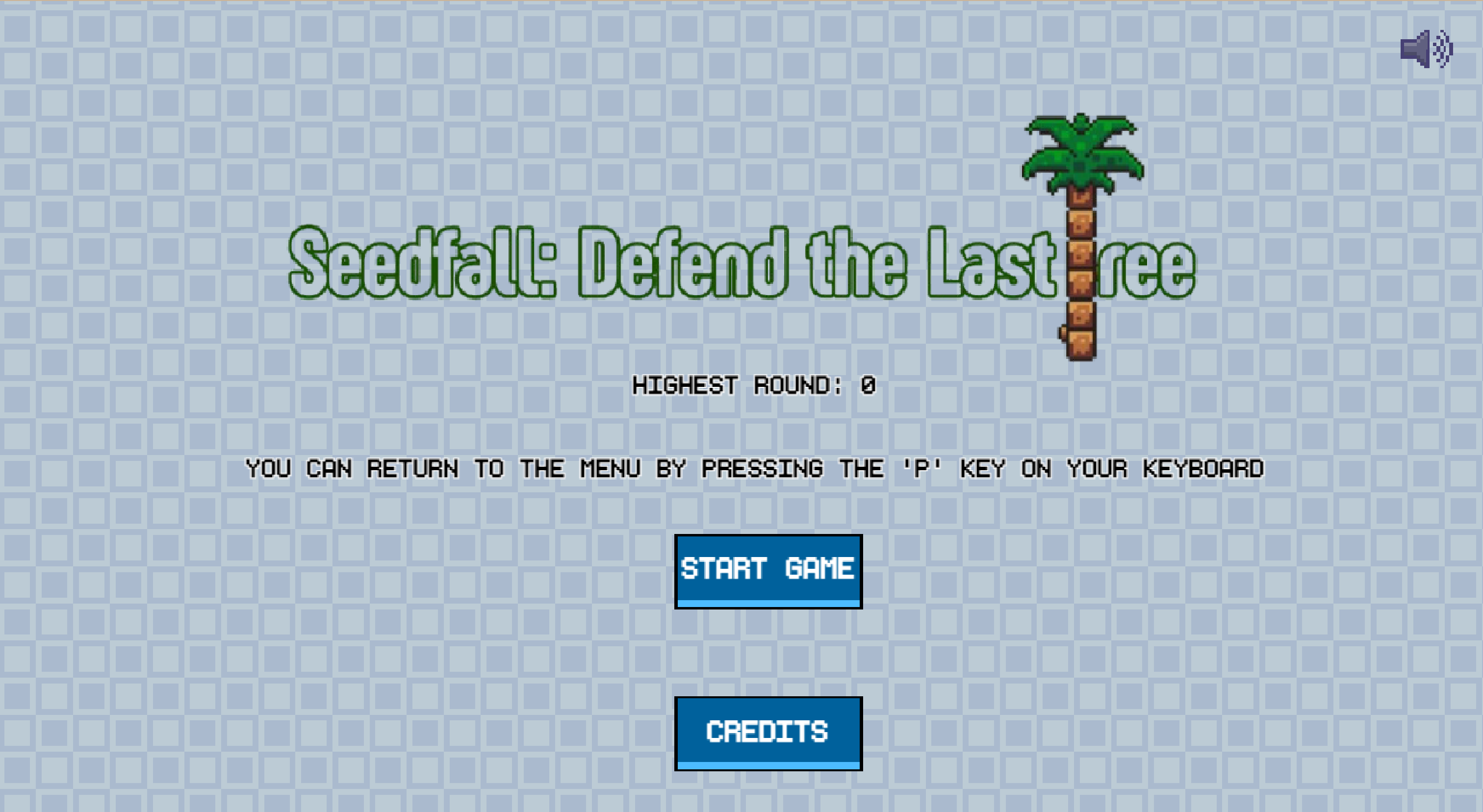
Seedfall: Defend the Last Tree is a 2D strategy defense game built around an ecological premise that gives its tower defense mechanics unusual emotional resonance: the Tree of Life is the last source of power protecting all living things, and the waves of monsters bearing down on it intend to destroy it permanently. You plant mushrooms, fortify trees, collect coins, and position your natural defenses to hold back an assault that intensifies with every wave. The fate of the ecosystem is, somewhat dramatically, entirely on you.
The game's design distinguishes itself from conventional tower defense titles through the resource loop at its heart. The Tree of Life generates coins that you use to plant defensive elements — mushrooms that generate additional coins passively, and fortified trees that form the physical defense layer against monster attacks. This creates a self-reinforcing economy where smart early positioning of mushrooms accelerates your coin generation, which funds more and better defensive structures faster than opponents who neglect the resource dimension in favor of immediate defense. The game rewards players who understand that generating resources and spending them on defense are not competing priorities but complementary ones.
The dual-threat structure of both protecting the Tree of Life and generating the resources to do so effectively gives Seedfall a strategic depth that belies its accessible presentation. Monster waves don't simply require that you have enough defenders — they require that your defenders are positioned intelligently, that your coin generation is high enough to respond to the wave's escalating pressure, and that you've balanced the immediate demands of the current wave with investment in the defensive infrastructure that later waves will demand. With attractive music, distinctive visual design, and a genuine ecological heart behind the gameplay, Seedfall: Defend the Last Tree is a strategy game that earns its place in the genre.
Key Details:
Genre:
Tower Defense / 2D Strategy
Difficulty Level:
Medium
Average Play Time:
20–40 minutes per session
Best For:
Strategy game fans who enjoy tower defense with resource management, ecological theming, and planting/positioning mechanics
How to Play Seedfall Defend The Last Tree?
Getting Started:
Begin with the Tree of Life as your primary structure — protect it above all other objectives.
Use the coins generated by the Tree of Life to plant mushrooms in available positions — mushrooms generate passive coin income that accelerates your economy.
Invest coins in fortified trees positioned between the monster approach paths and the Tree of Life — these form your active defense layer.
As monster waves advance, collect coins from defeated enemies and reinvest them in expanding your mushroom network and strengthening your defensive tree line.
Adjust your planting strategy based on each wave's monster density and approach path — some waves require prioritizing immediate defensive reinforcement over economic expansion.
Basic Controls:
Input
Action
Click on position
Plant mushroom or fortified tree
[Coin collect]
Gather coins from Tree of Life and defeats
Objective: Survive all monster waves by protecting the Tree of Life. Plant mushrooms for passive coin generation and fortified trees for active defense. Balance economic investment (mushrooms) against defensive investment (fortified trees) across each wave's escalating pressure.
Seedfall Defend The Last Tree Game Features & Highlights
Tree of Life central defense — the primary structure that must survive all waves and generates the coins that fund your entire defensive economy
Dual planting system — mushrooms (coin generation) and fortified trees (monster defense) create a resource management layer beneath the combat
Self-reinforcing economy — coins from the Tree of Life and defeated monsters reinvest into structures that generate more coins and more defense
Ecological narrative — a nature-protection theme that gives the tower defense mechanics emotional context beyond standard genre entries
Attractive visuals and music — distinctive 2D art style and soundtrack that makes the defense gameplay particularly engaging
Seedfall Defend The Last Tree Tips & Strategies
Beginner Tips:
Plant mushrooms before fortified trees in early waves — the passive coin income from mushrooms accelerates your economic base faster than any other early investment. A strong mushroom network early means significantly more coins available for fortified trees in later waves when the pressure is highest.
Position fortified trees in chokepoints, not scattered — trees placed in concentrated positions along the monster approach path create a defensive wall that monsters must defeat sequentially. Trees scattered across the whole map are individually weaker and don't protect each other.
Always reinvest collected coins immediately — coins sitting uncollected or unspent aren't working for your defense. Collect from the Tree of Life and defeated enemies promptly, and reinvest in the next most pressing need — another mushroom if the economy needs support, a fortified tree if the defense line has gaps.
Advanced Strategies:
Alternate mushroom and fortified tree placement in columns — a planting pattern that alternates coin generators with defenders along the monster approach path means that mushroom income is constant even when fortified trees are taking heavy damage and potentially being destroyed. An all-defense column that loses trees loses both defense and any future income from that position.
Invest in mushrooms during low-pressure inter-wave periods — the moments between waves when monster pressure is temporarily reduced are the optimal time for economic expansion. Spending inter-wave periods planting mushrooms rather than defensive trees increases your coin generation rate before the next wave's demands arrive.
Identify the monster approach path and concentrate defense there — not all positions on the map are equally valuable. Monsters follow specific paths toward the Tree of Life, and defensive trees positioned off that path deal no damage while consuming the same coin cost as well-positioned ones. Map the approach path and ensure fortified trees are exclusively placed along it.
What to Watch Out For:
Tree of Life health depletion in early waves — the Tree of Life's coin generation makes it the engine of your economy, which makes its loss catastrophic beyond the obvious game-ending consequence. If the Tree of Life is taking direct monster damage, your defensive line has failed — reallocate coins to emergency defense reinforcement rather than continuing economic expansion during an active breach.
Mushroom overinvestment that delays critical defense — the self-reinforcing economy incentive can produce over-investment in mushrooms at the expense of defense during waves that require immediate defensive response. Monitor incoming wave strength and ensure your defensive line is adequate before expanding the mushroom network further.
Seedfall Defend The Last Tree Game Elements Explained
Dual Planting Economy: The interaction between mushrooms and fortified trees is Seedfall's most important strategic system. Mushrooms are economic structures: they generate coins passively over time, compounding your available investment resources as more are planted. Fortified trees are defensive structures: they intercept and damage monsters advancing toward the Tree of Life, reducing the threat load on the primary structure. Neither type alone is sufficient for sustained survival — a pure mushroom strategy generates abundant coins without the defensive structures to spend them meaningfully; a pure fortified tree strategy creates strong defenses that eventually can't be maintained or expanded because coin income is insufficient to repair and replace damaged trees. The optimal strategy combines both: mushrooms planted for economic foundation, fortified trees invested from that foundation in the defensive positions that each wave demands. The ratio between these investments shifts dynamically based on current wave pressure and the Tree of Life's current health status.
Tree of Life Resource System: The Tree of Life is simultaneously the game's primary objective and its primary resource generator — a design decision that creates inherent drama around the central structure. As long as the Tree of Life survives, it generates coins that fund the defensive economy. If it's destroyed, the campaign ends. But its survival also depends on the defensive structures funded by the coins it generates — a circular dependency where the resource generator and the objective for protecting it are the same structure. This creates a strategic dynamic where the Tree of Life's health is never purely a matter of how close to losing you are; it's also a signal about whether your economy is generating enough resources to sustain the defense level the current wave requires. A Tree of Life taking damage while you have abundant unspent coins indicates a defensive positioning failure; one taking damage while you have no coins indicates an economic investment failure.
Wave-Based Monster Escalation: The monster waves in Seedfall: Defend the Last Tree escalate in both density and individual strength, creating a continuous demand for defensive expansion that the mushroom-and-tree economy must keep pace with. Early waves introduce the monster types and approach paths at manageable densities that teach the planting system without overwhelming it. Later waves test whether the economic foundation built in early waves is substantial enough to fund the defensive density required. The escalation is calibrated to the dual investment system — a player who has heavily invested in mushrooms will have the coins to expand defense rapidly in later waves; a player who neglected mushrooms will struggle to respond to late-wave monster density regardless of their defensive skill. The wave structure rewards sustained economic investment across the full campaign rather than purely reactive defense spending in response to immediate threats.
Seedfall Defend The Last Tree Frequently Asked Questions
Q: What's the difference between mushrooms and fortified trees? A: Mushrooms generate passive coin income over time — they're economic structures that fund your defense. Fortified trees actively defend against monster attacks, reducing the threat load on the Tree of Life. Both are essential: mushrooms without trees means no defense; trees without mushrooms means no economy to fund expanding defense.
Q: What should I do if monsters are reaching the Tree of Life? A: Immediately plant additional fortified trees between the approaching monsters and the Tree of Life — prioritize plugging the defensive gap over any other investment. Identify where the monster path is bypassing or breaking through your existing defensive line and reinforce that specific position.
Q: How do I generate coins in Seedfall? A: Coins come from two sources: the Tree of Life generates coins passively over time, and defeated monsters drop coins when eliminated. Collect both promptly and reinvest them in mushrooms (for more income) or fortified trees (for more defense) based on your current priority.
Q: Is Seedfall: Defend the Last Tree compatible with mobile devices? A: Seedfall uses click-based planting controls that translate to tap input on mobile touchscreen devices. The game should be compatible with mobile browsers — tap to plant mushrooms and fortified trees in available positions.
Q: What happens if the Tree of Life is destroyed? A: The campaign ends immediately if the Tree of Life is destroyed — it's the game's sole losing condition. All progress in that session is lost and the campaign must be restarted. The Tree of Life's survival is always the absolute priority, overriding all other investment decisions when it's under direct threat.
Related Games Like Seedfall Defend The Last Tree You Might Enjoy
If you like Seedfall: Defend the Last Tree, you might also enjoy:
Black Holeio - It is another easy-to-start browser game with strong replay value.
Wormateio - It is another easy-to-start browser game with strong replay value.
Roshambo - It is another easy-to-start browser game with strong replay value.

 Drift Frenzy
 Drift Rush
 Arcade Glide
 Track Dash
 Retro Rush
 Escape Road 3
 Wave Rider
 Traffic Road
 Escape Road City 2
 Bike Xtreme
 Escape Road 2
 Traffic Rally
 Tap Drift
 Drive Mad
 Wheelie Master
 Wheelie Party
 Moto X3M
 Street Wheelie
 Car Chaos
 Escape Drive
 Blocky Rider
 Mad Pursuit
 Mad Racers
 Chase Rush
 Smashy Road
 Driftio
 Night City Racing
 Hill Climb Racing
 Drift Hunters
 Smash Karts
 GT Cars Mega Ramps
 Motorcycle Racer Road Mayhem
 Funny Mad Racing