Treat each failure condition separately — getting caught, crashing, hitting a trap, and losing health are four different problems requiring four different approaches. Identify which failure condition is ending most of your runs and focus defensive improvement specifically on that condition rather than trying to improve everything simultaneously.
Drifting creates evasion angles that straight-line driving can't — tight turns executed at drift angles produce sharper direction changes than grip-limit turns at the same speed. In pursuit scenarios where police vehicles are tracking your straight-line trajectory, a drift-executed corner change can break their line of sight and tracking angle simultaneously.
Shortcuts earn coins from chaos — Mad Pursuit specifically rewards causing chaos alongside survival duration. Aggressive driving through obstacles that creates visual chaos (near-misses, environmental destruction) contributes to coin earnings beyond pure survival time. Don't treat obstacles as purely defensive threats; engage with them aggressively when the coin benefit justifies the risk.
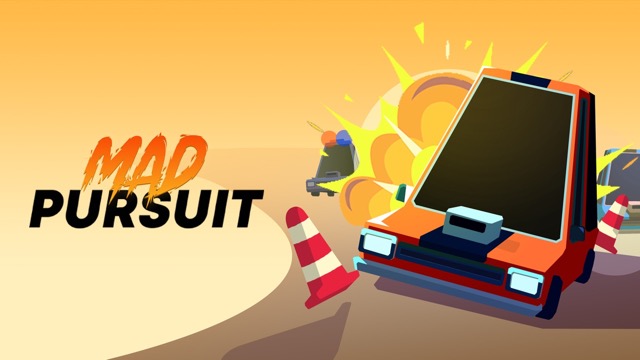
Mad Pursuit
Play Mad Pursuit online free at racing-limits.io. Jump into instant browser gameplay with no downloads.
Mad Pursuit is an arcade survival driving game that puts you in one of two roles depending on the mode: getaway driver evading police pursuit through chaotic environmental obstacle courses, or racer executing time-pressured laps against the clock. Both roles share the same underlying skill demands — quick reflexes, adaptive routing, and the situational awareness to read threats faster than they can develop into run-enders. What changes between modes is what you're running from and what you're running toward.
The police survival mode is where Mad Pursuit's identity lives most fully. The chase begins immediately and escalates — police coordination improves, traffic density increases, environmental hazards appear with less warning — and the run continues until you're caught, hard-crashed, trapped, or out of health. Each of these four failure conditions requires its own defensive approach: outrunning a police car is different from avoiding a ramp trap, which is different from managing a health bar depleted by repeated obstacle contact. Managing all four simultaneously is the compound pressure the mode consistently delivers.
The car unlock system is the game's long-term engagement mechanism. Coins earned through surviving (longer survival = more coins) fund a large selection of cars with improved stats and special features. The progression arc from basic starter car to high-tier unlocks changes what's possible against each mode's escalating difficulty — not just speed, but handling, durability, and capability against specific hazard types that the early-game cars handle poorly.
Key Details:
Genre:
Arcade Survival Racing
Difficulty Level:
Medium–Hard
Average Play Time:
5–15 minutes per run
Best For:
Players who enjoy police chase survival games with multiple modes, obstacle-filled environments, and progressive car unlocks
How to Play Mad Pursuit?
Getting Started:
Choose your mode — police survival (escape the cops) or racing (complete laps on time).
Use WASD or Arrow Keys to drive — steer, accelerate, brake, and reverse as needed.
In survival mode, immediately begin evading police vehicles using tight turns, drifting, and shortcuts as they become available.
Avoid all environmental hazards — trees, buildings, traffic, ramps, water — each of which can damage your car or end the run directly.
Collect coins during the run to fund car unlocks that improve your capabilities for subsequent sessions.
Basic Controls:
Key
Action
W / Up Arrow
Accelerate
S / Down Arrow
Brake / Reverse
A / Left Arrow
Steer Left
D / Right Arrow
Steer Right
Objective: Survive police pursuit as long as possible in survival modes, or complete racing missions within time limits in race modes. Collect coins to unlock higher-capability cars. The run ends on capture, hard crash, trap failure, or health depletion.
Mad Pursuit Game Features & Highlights
Multiple game modes — police survival and time-pressured racing with distinct objectives and challenge types
Four distinct failure conditions — capture, hard crash, trap failure, and health depletion each require different defensive responses
Environmental hazard variety — trees, buildings, traffic, ramps, and water create a dynamic obstacle environment beyond police pursuit
Large unlockable car selection — dozens of cars with improved stats and special features across the progression
Short, addictive run format — quick session length with immediate restart encourages repeated improvement attempts
Mad Pursuit Tips & Strategies
Beginner Tips:
Treat each failure condition separately — getting caught, crashing, hitting a trap, and losing health are four different problems requiring four different approaches. Identify which failure condition is ending most of your runs and focus defensive improvement specifically on that condition rather than trying to improve everything simultaneously.
Drifting creates evasion angles that straight-line driving can't — tight turns executed at drift angles produce sharper direction changes than grip-limit turns at the same speed. In pursuit scenarios where police vehicles are tracking your straight-line trajectory, a drift-executed corner change can break their line of sight and tracking angle simultaneously.
Shortcuts earn coins from chaos — Mad Pursuit specifically rewards causing chaos alongside survival duration. Aggressive driving through obstacles that creates visual chaos (near-misses, environmental destruction) contributes to coin earnings beyond pure survival time. Don't treat obstacles as purely defensive threats; engage with them aggressively when the coin benefit justifies the risk.
Advanced Strategies:
Route through narrow environmental features to shed pursuing vehicles — police cars that can't follow through tight environmental gaps (narrow building corridors, tree clusters) lose pursuit contact even at matching speeds. Learning which environmental features create pursuit gaps on each map is more valuable than pure top-speed advantage.
Health management requires proactive contact avoidance, not reactive — health depletion from repeated obstacle contact is one of the more insidious failure conditions because individual contacts seem minor but compound quickly. The correct approach is near-zero contact from the run's start, not emergency health management after significant depletion.
In racing modes, clean laps beat fast laps — time penalties from corner cuts, crashes, or obstacle contact in racing modes often exceed the time saved by aggressive routing that produces them. Find the fastest clean route rather than the theoretically fastest route with recoverable errors built in.
What to Watch Out For:
Water hazards ending runs without warning — water contact is an immediate run-ender in many Mad Pursuit configurations, unlike most other obstacles that deplete health progressively. Treat water as a hard boundary rather than a damage-producing obstacle — no amount of health cushion helps against it.
Police vehicle coordination improving over time — early-run police behave predictably and independently; later-run police coordinate intercept angles more effectively. Evasion techniques that worked in the first minute of a run may be specifically countered by improved police coordination at the five-minute mark. Stay adaptive rather than relying on a single consistent routing approach.
Mad Pursuit Game Elements Explained
Four Failure Conditions: Mad Pursuit's four distinct run-ending conditions — capture, hard crash, trap failure, and health depletion — each create different pressure dynamics and require different defensive priorities. Capture (police contact maintained too long) requires evasion routing; hard crashes (high-speed collisions that exceed survivable damage thresholds) require speed management and obstacle awareness; trap failures (ramps, gaps, or specific environmental hazards that immediately end the run) require specific hazard identification and avoidance; health depletion (accumulated damage from multiple minor obstacles) requires sustained contact minimization throughout the run. The compound nature of defending against all four simultaneously — while also maintaining coins and progressing mission objectives — is what makes Mad Pursuit's difficulty feel genuinely escalating rather than repetitively simple.
Police Pursuit Escalation: The police pursuit in Mad Pursuit is specifically designed to increase in coordination and effectiveness the longer a survival run extends. Early-run police vehicles pursue individually and predictably, responding to your current position with limited anticipatory positioning. Later-run police coordinate intercept angles — some pursuing from behind while others position ahead of your projected route, attempting to create a cordon that requires evasion innovation rather than simple speed advantage. This escalation means that every evasion technique has a time horizon: it works until the police coordination level exceeds its effectiveness, at which point a different approach is required. The progression from initial pursuit to coordinated cordon is the difficulty arc that Mad Pursuit's survival mode delivers across each run.
Car Unlock Progression: Mad Pursuit's coin-funded car progression is calibrated so that each tier of unlocks provides specific capability improvements against specific failure conditions. Entry-level unlocked cars may provide improved top speed that helps against capture; mid-tier cars may offer improved handling that reduces hard-crash frequency; higher-tier cars may feature special abilities that provide specific advantages against traps or reduce health depletion from obstacle contact. This category-specific improvement means that car selection is a strategic decision beyond simple "higher tier is always better" logic — the car best suited to your current primary failure condition may not be the highest-tier model available. Understanding which car's specific improvements address your specific weakness is the meta-game layer that experienced Mad Pursuit players engage with.
Mad Pursuit Frequently Asked Questions
Q: What ends a run in Mad Pursuit? A: Four distinct conditions: capture (police maintain contact too long), hard crash (high-speed collision exceeding survivable damage), trap failure (specific environmental hazards like water or ramps that immediately end the run), and health depletion (accumulated damage from repeated obstacle contact). Different defensive strategies address each condition.
Q: How do I earn coins faster? A: Survive longer (duration contributes to coin earnings) and drive aggressively through obstacles that reward chaos. Near-misses, environmental interactions, and successful police evasion all contribute to per-run coin totals beyond basic survival time. The game explicitly rewards causing chaos, not just avoiding it.
Q: Is Mad Pursuit compatible with mobile devices? A: Mad Pursuit uses WASD/arrow key controls and is best suited for desktop and laptop browsers. Mobile play requires a connected external keyboard for reliable driving inputs during the fast-paced pursuit sequences.
Q: How do the racing modes differ from survival modes? A: In racing modes you take on a racer role with timed lap objectives — complete the required laps before the clock expires. In survival modes you're a getaway driver — survive police pursuit as long as possible. Both share driving mechanics but have entirely different success conditions and optimal driving approaches.
Q: What's the most important early upgrade? A: Identify which of the four failure conditions is ending most of your runs and unlock a car that specifically addresses it. If capture ends most runs, prioritize speed. If crashes dominate, prioritize handling. If health depletion is the issue, prioritize durability. Targeted unlock investment outperforms uniform tier-climbing without attention to specific weaknesses.
Related Games Like Mad Pursuit You Might Enjoy
If you like Mad Pursuit, you might also enjoy:
Drive Mad - It shares similar browser-game pacing and gives you another quick challenge to master.
Mad Trails - It shares similar browser-game pacing and gives you another quick challenge to master.
Black Holeio - It is another easy-to-start browser game with strong replay value.

 Drift Frenzy
 Drift Rush
 Arcade Glide
 Track Dash
 Retro Rush
 Escape Road 3
 Wave Rider
 Traffic Road
 Escape Road City 2
 Bike Xtreme
 Escape Road 2
 Traffic Rally
 Tap Drift
 Drive Mad
 Wheelie Master
 Wheelie Party
 Moto X3M
 Street Wheelie
 Car Chaos
 Escape Drive
 Blocky Rider
 Mad Pursuit
 Mad Racers
 Chase Rush
 Smashy Road
 Driftio
 Night City Racing
 Hill Climb Racing
 Drift Hunters
 Smash Karts
 GT Cars Mega Ramps
 Motorcycle Racer Road Mayhem
 Funny Mad Racing