[Throttle]: Accelerate and control wheelie elevation angle
[Brake]: Reduce angle on over-lean; recover front wheel position
[Balance Input]: Sustain wheelie stability through continuous adjustment
High Score Tips
Use Practice map before urban maps — City and Town introduce traffic and visual complexity that competes with the focused attention wheelie balance requires. Develop your throttle and brake recovery instincts in Practice's controlled environment first.
Gradual acceleration is more controllable than sudden full throttle — sudden full-power application pitches the bike to a high angle before balance control is established. A gradual build gives you time to settle into the balance point before the angle becomes difficult to manage.
Brake recovery is the skill the game most rewards — when the bike leans too far back, a precise, moderately firm brake input pulls the front wheel just enough to recover without dropping it entirely. Too hard and the wheelie ends; too soft and the recovery fails. This precision is the specific technique that separates short wheelies from long ones.
Street Wheelie
Play Street Wheelie online free at racing-limits.io. Jump into instant browser gameplay with no downloads.
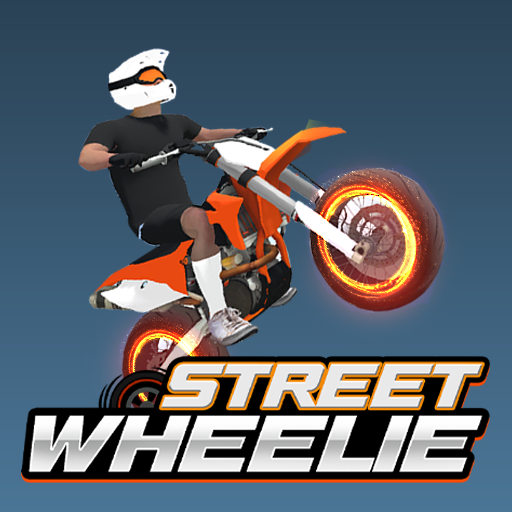
Street Wheelie is a 3D physics-based wheelie game that takes the single-stunt challenge and surrounds it with everything a serious rider experience needs: open maps to explore, a roster of unlockable bikes, and a full rider gear system — helmets, gloves, goggles — that lets you build the look of your rider alongside the skill of your riding. The core objective is unchanged from every wheelie game: keep the front wheel elevated as long as possible without flipping backward or touching down. But Street Wheelie's physics model is specifically tuned for authentic throttle response, which means the gap between intent and outcome is narrower than simplified wheelie games allow, and the skill ceiling is correspondingly higher.
The four open maps — Practice, City, Country, and Town — each create a different context for the same wheelie challenge. Practice removes all environmental complexity, providing clean surface and space to calibrate throttle inputs without distraction. City delivers the urban riding experience with the visual texture of a real street environment. Country and Town each bring their own surface characteristics and scenery. This variety means each session can serve a different purpose: Practice for technique work, the other maps for performance and exploration. The map selection is a genuine choice rather than cosmetic.
Rider gear customization is what gives Street Wheelie its identity among wheelie games. The ability to build a specific helmet-gloves-goggles combination turns the rider into a personal character rather than a generic placeholder. Combined with the bike collection, this customization depth makes Street Wheelie feel like a complete riding experience rather than a pure skill exercise — a game you inhabit rather than simply perform.
Key Details:
Genre:
3D Wheelie Simulation / Stunt Riding
Difficulty Level:
Medium
Average Play Time:
15–30 minutes per session
Best For:
Players who enjoy wheelie games with realistic throttle physics, open map exploration, full rider and bike customization, and genuine skill depth
How to Play Street Wheelie?
Getting Started:
Equip your rider with helmet, gloves, and goggles — then select your bike.
Choose your map: Practice for technique development, or City/Country/Town for environment riding.
Build speed gradually rather than applying full throttle — smooth acceleration produces more controllable wheelie conditions.
Lift the front wheel through throttle management to initiate the wheelie — maintain it through continuous balance input.
When the bike leans too far back, apply a precise brake input to recover the front wheel angle without fully dropping it.
Basic Controls:
Input
Action
[Throttle]
Accelerate and control wheelie elevation angle
[Brake]
Reduce angle on over-lean; recover front wheel position
[Balance Input]
Sustain wheelie stability through continuous adjustment
Objective: Maintain wheelies for maximum distance across Street Wheelie's open maps. Develop throttle control and brake recovery technique. Earn performance rewards to unlock bikes and upgrade rider gear.
Street Wheelie Game Features & Highlights
Enhanced realistic wheelie physics — throttle response and balance behavior specifically tuned for authentic feel
Four open maps — Practice, City, Country, and Town each with distinct environments and surface feel
Full rider gear customization — helmets, gloves, and goggles for building a personal rider identity
Wide unlockable bike collection — multiple motorcycles with meaningfully different handling characteristics
Immersive sound design — audio that contributes to the realistic riding atmosphere alongside the enhanced physics
Street Wheelie Tips & Strategies
Beginner Tips:
Use Practice map before urban maps — City and Town introduce traffic and visual complexity that competes with the focused attention wheelie balance requires. Develop your throttle and brake recovery instincts in Practice's controlled environment first.
Gradual acceleration is more controllable than sudden full throttle — sudden full-power application pitches the bike to a high angle before balance control is established. A gradual build gives you time to settle into the balance point before the angle becomes difficult to manage.
Brake recovery is the skill the game most rewards — when the bike leans too far back, a precise, moderately firm brake input pulls the front wheel just enough to recover without dropping it entirely. Too hard and the wheelie ends; too soft and the recovery fails. This precision is the specific technique that separates short wheelies from long ones.
Advanced Strategies:
Find your speed range for each bike — each unlockable bike sustains its optimal wheelie at a specific speed range. Too fast and the bike becomes unstable; too slow and front-wheel elevation requires more throttle than the balance allows cleanly. Identify the range for each bike and hold it deliberately rather than chasing maximum speed.
Different maps require throttle recalibration — surface variation across maps affects how the bike responds to the same throttle input. Spend early runs on each new map calibrating your throttle feel before attempting extended wheelies.
Treat gear selection as part of your session ritual — configuring your rider's gear before each session isn't just cosmetic housekeeping. It's the mental signal that shifts attention from daily life to the specific, focused activity that good wheelie performance requires. The ritual matters.
What to Watch Out For:
Overcorrecting the brake recovery — the precise brake that recovers a too-far-back lean is easy to overshoot. Too much brake application drops the front wheel hard, ending the wheelie abruptly. Practice the recovery input specifically at moderate lean angles before attempting it from extreme angles under pressure.
Traffic in City and Town maps as attention competitors — urban environments introduce visual activity that competes with the narrow attention wheelie balance requires. Expect shorter wheelies in urban maps until you've developed enough automatic balance feel that environmental distraction doesn't interrupt your throttle management.
Street Wheelie Game Elements Explained
Wheelie Physics Model: Street Wheelie's physics specifically models the relationship between throttle, speed, and front-wheel elevation angle as a continuous dynamic system rather than a simplified balance meter. Throttle input affects both forward speed and the torque-driven lift force on the front wheel — more throttle increases both simultaneously. At different speeds, the same throttle input produces different front-wheel responses because aerodynamic and weight forces shift with velocity. The implication is that maintaining a wheelie is not just holding a throttle position; it's managing a relationship between throttle, speed, and angle that requires continuous micro-adjustment as all three variables interact. Developing an intuitive feel for this relationship — rather than a conscious step-by-step management approach — is what produces smooth, extended wheelies.
Four-Map Structure: The maps in Street Wheelie each serve a distinct function within the game's skill development and performance riding ecosystem. Practice provides clean, controlled conditions for technique isolation — no traffic, predictable surface, full attention available for throttle and brake work. City introduces the urban riding aesthetic with traffic and street infrastructure that adds visual richness and navigational complexity. Country and Town each bring different surface textures and environmental contexts that change how the physics feel under the same inputs. This range means the game supports both a focused skill development approach (Practice map sessions) and a performance riding approach (urban and rural maps) depending on what the player needs from a given session.
Rider and Bike Customization: The dual customization layer — rider gear and bike selection — gives Street Wheelie a personal identity dimension that pure score-based wheelie games skip. Helmet, gloves, and goggles each have selectable options that combine into a rider appearance that feels specifically yours rather than generic. Bike selection adds a handling dimension: different models have distinct throttle response profiles, balance point characteristics, and stability behaviors that produce different wheelie experiences with the same rider inputs. Neither customization layer is purely cosmetic — gear creates the rider identity that makes the session feel personally invested, and bike selection creates handling variety that rewards developing fluency across the full roster.
Street Wheelie Frequently Asked Questions
Q: How do I initiate a wheelie in Street Wheelie? A: Build speed gradually through progressive throttle increase — avoid sudden full-power application. As speed builds, the front wheel naturally begins to lift under continued throttle. Sustain the elevation through throttle management rather than a single large input.
Q: What do I do when the bike leans too far back? A: Apply a precise, moderately firm brake input to pull the front wheel back down just enough to recover the angle. Too much brake drops the front wheel completely; too little fails to correct the lean. The recovery precision is the most important single skill the game develops.
Q: Why do different bikes feel different? A: Each bike has a distinct throttle response profile, balance point, and stability characteristic that produces different wheelie behavior under the same rider inputs. These are genuine handling differences — not just cosmetic — that reward developing specific technique for each model rather than applying a single universal approach.
Q: Is Street Wheelie compatible with mobile devices? A: Street Wheelie's 3D physics simulation is best experienced on desktop browsers with keyboard input. Check the in-game control options for mobile touch configurations — performance varies by device and browser.
Q: What's the best map for improving wheelie technique? A: The Practice map — it removes traffic, visual complexity, and surface variation to provide a clean environment where throttle management and brake recovery can be developed in isolation before being applied in the more demanding urban and rural map environments.
Related Games Like Street Wheelie You Might Enjoy
If you like Street Wheelie, you might also enjoy:
Wheelie Master - It delivers a similar driving challenge with quick browser-based racing sessions.
Wheelie Party - It delivers a similar driving challenge with quick browser-based racing sessions.
Driftio - It delivers a similar driving challenge with quick browser-based racing sessions.

 Drift Frenzy
 Drift Rush
 Arcade Glide
 Track Dash
 Retro Rush
 Escape Road 3
 Wave Rider
 Traffic Road
 Escape Road City 2
 Bike Xtreme
 Escape Road 2
 Traffic Rally
 Tap Drift
 Drive Mad
 Wheelie Master
 Wheelie Party
 Moto X3M
 Street Wheelie
 Car Chaos
 Escape Drive
 Blocky Rider
 Mad Pursuit
 Mad Racers
 Chase Rush
 Smashy Road
 Driftio
 Night City Racing
 Hill Climb Racing
 Drift Hunters
 Smash Karts
 GT Cars Mega Ramps
 Motorcycle Racer Road Mayhem
 Funny Mad Racing