Start with Famous Places — the Famous Places map uses globally recognizable landmarks that build confidence in the guessing mechanic before the Standard map's challenges overwhelm you with ambiguous locations. Early success in Famous Places also begins training your eye for the visual cues that will matter on harder maps.
Read every piece of text in the environment — road signs, business names, warning notices, and street markers often contain language that immediately identifies a country or region. Even partial text in an unfamiliar alphabet can narrow your guess from "somewhere in Asia" to a specific language group.
Look at road infrastructure before anything else — road quality, lane marking style, guardrail design, and signage format are often the fastest country identifiers in ambiguous locations. Infrastructure is standardized within countries in ways that individual landmarks aren't.
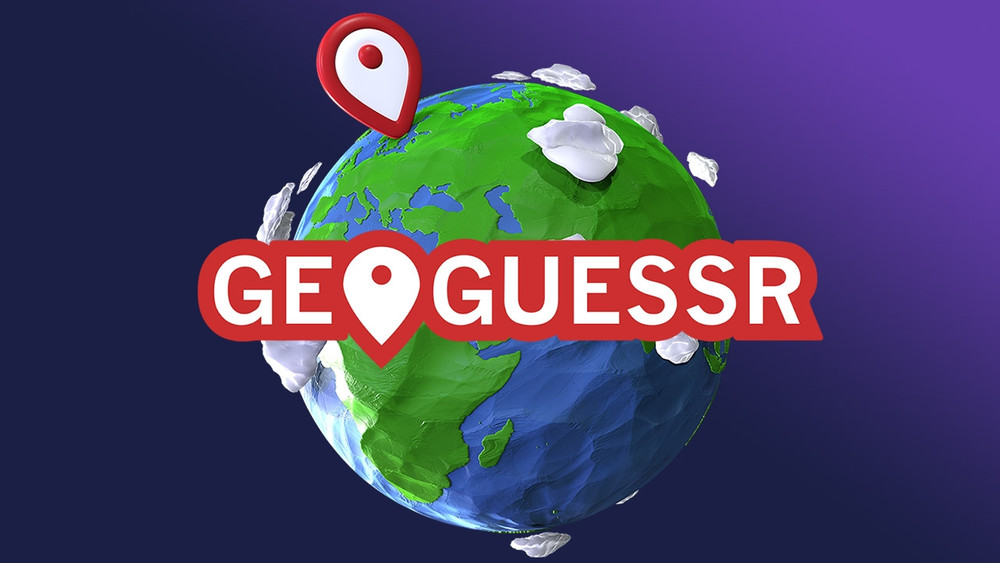
Geoguessr
Play Geoguessr online free at racing-limits.io. Jump into instant browser gameplay with no downloads.
GeoGuessr is one of the most genuinely educational and surprising games available in a browser — a geography challenge that drops you somewhere on Earth and asks you to figure out where. Not with a map, not with GPS coordinates, but with the same visual evidence a traveler would have: the landscape around you, the road signs, the architecture, the vegetation, the quality of the light, the style of the lane markings, and a hundred other subtle cues that, taken together, narrow your location from "somewhere on Earth" to a specific country, region, or even city.
The game's genius is how much geography it teaches without feeling like instruction. Players who start by recognizing nothing beyond obvious landmarks — the Eiffel Tower, Times Square — quickly develop an eye for the regional visual signatures that identify locations at a glance: the distinctive red soil of certain African nations, the specific blue-and-white road markings of Greece, the dense tropical vegetation of Southeast Asia, the snow-capped mountain ranges of the Andes. Every wrong guess teaches you something you'll know on the next attempt, and the knowledge compounds into a genuinely expanding geographic intuition that transfers to real-world understanding.
GeoGuessr's three map categories — Standard, Capital Cities, and Famous Places — create a natural difficulty progression that serves both casual players looking for recognizable landmarks and hardcore geography enthusiasts who want the challenge of being dropped in a rural back road in a country with few distinctive visual markers. The multiplayer mode, with private room creation and open lobby joining, extends the experience into genuine social competition — comparing your guess accuracy with friends across the same locations adds a collaborative dimension that the solo mode can't replicate. GeoGuessr is rare among browser games in that it gets meaningfully better the more you play it, because the player gets better alongside the game.
Key Details:
Genre:
Geography / Educational Puzzle
Difficulty Level:
Easy (Famous Places) to Very Hard (Standard)
Average Play Time:
10–20 minutes per session
Best For:
Geography enthusiasts, curious learners, trivia fans, and players who enjoy exploration and observation-based challenges
How to Play Geoguessr?
Getting Started:
Select your map category — Famous Places for landmark-based guessing, Capital Cities for capital-focused challenges, or Standard for the full unpredictable world map.
You appear at a random location in a 360-degree street-view environment — hold Left Mouse Button and drag to look around in all directions.
Observe every available visual clue: road signs, written language, vegetation, architecture, terrain, sky conditions, vehicle types, and infrastructure style.
Locate your best guess on the mini-map in the screen corner — click to place your guess pin on the country or region you believe you're in.
Click Guess to submit your answer — your score is based on the proximity of your guess to the actual location.
Basic Controls:
Input
Action
Hold LMB + Drag
Rotate view 360 degrees
Mini-map Click
Place your guess pin
Guess Button
Submit your answer
Objective: Identify your location on Earth using only the visual evidence of the street-view environment. Score points based on how closely your guess matches the actual location — the closer your pin to the real location, the higher your score. Across multiple rounds, accumulate the highest total score possible.
Geoguessr Game Features & Highlights
Three map categories — Famous Places, Capital Cities, and Standard offer a clear progression from accessible to challenging
Full 360-degree exploration — rotate your view in any direction to gather environmental evidence from every angle
Multiplayer mode — create private rooms for friend competition or join open lobbies to compare accuracy with other players worldwide
Educational depth — genuine geographic knowledge develops naturally through repeated play, making GeoGuessr one of the few games that demonstrably improves a real-world skill
Global location variety — the Standard map places you anywhere on Earth, from major cities to remote rural roads
Geoguessr Tips & Strategies
Beginner Tips:
Start with Famous Places — the Famous Places map uses globally recognizable landmarks that build confidence in the guessing mechanic before the Standard map's challenges overwhelm you with ambiguous locations. Early success in Famous Places also begins training your eye for the visual cues that will matter on harder maps.
Read every piece of text in the environment — road signs, business names, warning notices, and street markers often contain language that immediately identifies a country or region. Even partial text in an unfamiliar alphabet can narrow your guess from "somewhere in Asia" to a specific language group.
Look at road infrastructure before anything else — road quality, lane marking style, guardrail design, and signage format are often the fastest country identifiers in ambiguous locations. Infrastructure is standardized within countries in ways that individual landmarks aren't.
Advanced Strategies:
Learn the distinctive visual signatures of commonly appearing regions — Standard map locations cluster in countries with extensive street-view coverage. Developing rapid recognition for the distinctive soil color, vegetation type, and sky quality of frequently appearing regions (sub-Saharan Africa, South America, Southeast Asia) dramatically improves your guess accuracy on ambiguous locations.
Use sun position for hemisphere identification — in locations where text and infrastructure give no clear country identification, the sun's position relative to north-facing surfaces can confirm whether you're in the northern or southern hemisphere. This narrows a global guess by 50% before you've read a single sign.
Examine vehicle license plates — license plate colors, shapes, and design conventions vary significantly by country and sometimes by region within a country. Even without reading the text, the visual format of a license plate is often a reliable country identifier.
What to Watch Out For:
Guessing before fully rotating your view — the temptation to guess as soon as you recognize a partial clue can lead to misidentification when a full 360-degree rotation would have revealed a clearer identifier in the opposite direction. Always complete a full view rotation before committing to a guess.
Confusing visually similar regions — some pairs of countries have enough shared visual characteristics that distinguishing them requires close attention to subtle differences. Sub-Saharan African countries, Scandinavian nations, and South American coastal cities each have internal visual similarities that trap players who haven't developed fine-grained regional recognition. Focus on the details that differ within groups, not the broad similarities.
Geoguessr Game Elements Explained
Location & Clue System: GeoGuessr's core mechanic is environmental evidence reading — the skill of identifying location from the cumulative weight of visual details that individually might be ambiguous but together produce a reliable identification. The street-view environment provides evidence across multiple categories simultaneously: linguistic (text in view), infrastructural (road design, signage style), botanical (vegetation type and density), architectural (building style, construction materials, age), meteorological (sky quality, season indicators), and cultural (advertising content, dress style of visible people). Expert players develop a hierarchy of clue reliability — language text is the most definitive single identifier when present; infrastructure design is the most reliable when text is absent; vegetation and terrain are the most useful for regional differentiation when country is already established. Building this evidence hierarchy through experience is the skill development arc that makes GeoGuessr genuinely more rewarding the longer you play it.
Map Categories: The three map categories serve meaningfully different player needs and skill levels. Famous Places populates rounds with globally recognizable landmarks — the Colosseum, the Taj Mahal, the Eiffel Tower — where the correct answer is immediately apparent to anyone with basic global landmark recognition. It's the ideal entry point for new players and the fastest way to build confidence in the guessing mechanic. Capital Cities restricts locations to national capitals, which are more consistently identifiable than random rural locations but more challenging than Famous Places — players need capital city recognition rather than global landmark recognition. The Standard map is the full GeoGuessr experience: any location anywhere on Earth, including remote rural roads with few identifying features, where deep geographic knowledge and careful evidence reading are both required. The progression from Famous Places to Capital Cities to Standard mirrors the knowledge development arc that dedicated players naturally follow.
Multiplayer Mode: GeoGuessr's multiplayer component transforms the solo observation challenge into a social geography competition. Players can create private rooms and share the room code with friends, allowing groups to compete on identical locations simultaneously — comparing not just who scored higher but discussing the clues that led to each guess, which is often as engaging as the game itself. Open lobby joining connects you with players worldwide who are competing in public rooms. The multiplayer format changes the game's pacing: in solo play, rounds can be taken at any speed; in multiplayer, the awareness that others are guessing simultaneously creates time pressure that makes hasty identification decisions more tempting. The collaborative post-round discussion that naturally emerges in private room play — "How did you know that was Portugal?" — is the mechanism through which GeoGuessr's geographic knowledge transfer most efficiently happens.
Geoguessr Frequently Asked Questions
Q: How do I look around in GeoGuessr? A: Hold down the Left Mouse Button and drag your mouse to rotate your view in any direction. Release to stop rotating. Perform a full 360-degree rotation to ensure you've examined all available visual evidence before submitting your guess.
Q: What map should I start with as a new player? A: Begin with Famous Places — it uses globally recognized landmarks that make your first guesses confirmable and your learning curve manageable. Move to Capital Cities once Famous Places feels accessible, then tackle the Standard map when you're ready for the full challenge of unrestricted global locations.
Q: Is GeoGuessr a multiplayer game? A: Yes — GeoGuessr includes a multiplayer mode where you can create a private room and invite friends by sharing the room code, or join open lobbies to compete with players worldwide. All participants guess from identical locations, and scores are compared at the end of each round.
Q: Is GeoGuessr compatible with mobile devices? A: GeoGuessr supports touch controls on mobile browsers — swipe to rotate your view and tap the mini-map to place your guess. The experience is fully functional on mobile, though the larger screen of a desktop or laptop makes examining fine visual details (text, signage, infrastructure) easier.
Q: How is the score calculated? A: Your score for each round is based on the geographic distance between your guess pin and the actual location. A guess placed exactly on the correct location scores the maximum points; guesses placed further away score proportionally fewer points. Total scores across all rounds determine your final result in both solo and multiplayer sessions.
Related Games Like Geoguessr You Might Enjoy
If you like Geoguessr, you might also enjoy:
Tilemanio - It offers a related skill loop where timing, planning, or steady improvement matters.
Brainrot Merge - It offers a related skill loop where timing, planning, or steady improvement matters.
Riddle School 2 - It offers a related skill loop where timing, planning, or steady improvement matters.

 Drift Frenzy
 Drift Rush
 Arcade Glide
 Track Dash
 Retro Rush
 Escape Road 3
 Wave Rider
 Traffic Road
 Escape Road City 2
 Bike Xtreme
 Escape Road 2
 Traffic Rally
 Tap Drift
 Drive Mad
 Wheelie Master
 Wheelie Party
 Moto X3M
 Street Wheelie
 Car Chaos
 Escape Drive
 Blocky Rider
 Mad Pursuit
 Mad Racers
 Chase Rush
 Smashy Road
 Driftio
 Night City Racing
 Hill Climb Racing
 Drift Hunters
 Smash Karts
 GT Cars Mega Ramps
 Motorcycle Racer Road Mayhem
 Funny Mad Racing