[Drift/Turn]: Execute sharp turns and drift maneuvers
High Score Tips
Never drive in a straight line for more than a moment — straight-line movement is the easiest pursuit pattern for police AI to predict and intercept. Any straight section should be followed immediately by a directional change, even a gentle one. Unpredictability is your primary defense.
Use the arena's full space — players who stay in the center of the arena are effectively surrounded by available police approach angles from all sides. The arena's edges provide temporary directional constraints that you can use deliberately to create specific pursuit geometries.
Think of each sharp turn as potentially misdirecting a police car — when you turn sharply, police vehicles behind you must also turn. If two police are pursuing from slightly different angles and you cut sharply between their predicted paths, their corrective turns can bring them into each other's trajectories. This is the foundation of collision engineering.
Chase Rush
Play Chase Rush online free at racing-limits.io. Jump into instant browser gameplay with no downloads.
Chase Rush is a 3D open-arena police chase game that strips the getaway format down to its purest competitive element: an open space, your car, and an escalating number of police vehicles trying to corner you. No tracks, no checkpoints, no finish lines — just continuous survival in an arena where the police count grows, their speed increases, and the only tool you have is movement. The arena's open geometry means every escape route is always available in theory; the challenge is executing the directional changes, drifts, and unpredictable sequences that prevent the police from turning "always available in theory" into "actually cornered in practice."
The scoring system adds a dimension beyond pure survival duration. Making police cars crash into each other — engineering their collision rather than simply evading them — earns points that survival time alone doesn't. This creates a secondary objective within each run: not just avoiding police contact, but actively maneuvering to position police vehicles into each other's paths. The player who can dodge and engineer collisions simultaneously will always outscore the player who only dodges, making Chase Rush a more active and interesting game than a pure evasion challenge would be.
The gem collection and car unlock system give the arcade format a progression layer. Different cars have different speeds, attributes, and turning radii — characteristics that change what's possible against the escalating police pressure of later survival phases. A car with a tighter turning radius enables sharper deceptive moves; a faster car creates more separation distance per sprint. Building toward better cars through gem collection gives each run's survival purpose beyond the immediate score.
Key Details:
Genre:
Open Arena Police Chase / Arcade Survival
Difficulty Level:
Easy start, Very Hard at long survival
Average Play Time:
3–10 minutes per run
Best For:
Players who enjoy police chase survival games with open arena formats, drift mechanics, and engineering-police-collisions scoring
How to Play Chase Rush?
Getting Started:
Enter the open arena — police vehicles begin pursuing you immediately from the run's start.
Use sharp turns, drifts, zigzag patterns, and tight loops to break the police's pursuit angles and prevent cornering.
Avoid straight-line driving — consistent straight paths allow police to predict your position and close in effectively.
Position your movements to direct police vehicles into each other's paths — their collisions earn points.
Collect gems scattered in the arena to fund car unlocks with improved speed, attributes, and turning radius.
Basic Controls:
Input
Action
[Steering]
Turn and navigate the arena
[Drift/Turn]
Execute sharp turns and drift maneuvers
Objective: Survive police pursuit as long as possible in the open arena while earning points through police-on-police collisions you engineer. Collect gems to unlock better cars. The run ends when caught or after too many collisions with police vehicles deplete your lives.
Chase Rush Game Features & Highlights
Open arena format — no tracks or checkpoints; pure open-space evasion creates a constantly evolving pursuit geometry
Police collision scoring — engineering police vehicles to crash into each other earns points beyond survival duration
Escalating police pressure — more cops, faster speeds, tighter coordination as the run extends
Drift and directional deception mechanics — drifts, zigzags, tight loops, and unpredictable moves as the primary evasion toolkit
Gem-funded car unlocks — distinct cars with different speeds, turning radii, and attributes affect what's possible at high survival times
Chase Rush Tips & Strategies
Beginner Tips:
Never drive in a straight line for more than a moment — straight-line movement is the easiest pursuit pattern for police AI to predict and intercept. Any straight section should be followed immediately by a directional change, even a gentle one. Unpredictability is your primary defense.
Use the arena's full space — players who stay in the center of the arena are effectively surrounded by available police approach angles from all sides. The arena's edges provide temporary directional constraints that you can use deliberately to create specific pursuit geometries.
Think of each sharp turn as potentially misdirecting a police car — when you turn sharply, police vehicles behind you must also turn. If two police are pursuing from slightly different angles and you cut sharply between their predicted paths, their corrective turns can bring them into each other's trajectories. This is the foundation of collision engineering.
Advanced Strategies:
Engineer collisions by using yourself as bait — the most reliable collision engineering technique is drawing two police vehicles to converge on your position from different angles and then moving out of that convergence point just before they arrive. The two vehicles arrive at the same space at the same time — without you. This requires reading which vehicles are tracking you from which angles, which is the key spatial awareness skill Chase Rush develops.
Use drift exits to create unpredictable post-turn angles — a standard turn changes direction predictably; a drift through the same turn changes direction and adds lateral drift distance that wasn't in the pre-turn trajectory. Police that are tracking your standard turn angle will miss your actual exit position from a drift turn, creating larger separation than a clean turn provides.
Tight loop sequences confuse distributed pursuit — when police vehicles are spread across the arena tracking you from multiple angles, a tight loop sequence (small repeated circles) draws their vectors into the same area and sometimes creates multiple collisions as they arrive at similar positions simultaneously.
What to Watch Out For:
Diagonal cornering by police pairs — experienced Chase Rush players recognize when two police vehicles are positioning at 90-degree angles to each other relative to your position. This diagonal pair is the most effective police cornering formation. The correct response is an immediate direction change perpendicular to the angle bisecting them, not a retreat along either of their pursuit vectors.
Speed increasing making drift control tighter — as police vehicles get faster in longer runs, your own car needs to maintain speed to avoid being caught from behind. Higher speeds make drift control more demanding. Practice drift execution at high speed specifically, not just at comfortable early-run speeds.
Chase Rush Game Elements Explained
Open Arena Pursuit System: Chase Rush's arena format is the core design choice that defines its gameplay character. Traditional chase games constrain pursuit to road geometry — your escape options are determined by available streets. An open arena removes this constraint entirely: any direction is always available, which shifts the challenge from finding escape routes to manufacturing them through movement patterns. This design places the game's full difficulty on the player's active movement intelligence rather than route knowledge. The open space that initially seems to favor the player — unlimited escape directions — is also what makes advanced police coordination effective, because the police don't face any geometric constraint either. The arena becomes the shared space where the relative quality of movement intelligence determines the outcome.
Police Collision Scoring System: The scoring system in Chase Rush rewards active collision engineering rather than passive evasion survival. Points are generated when police vehicles crash into each other — a direct result of the player's maneuvering positioning two police pursuit trajectories to intersect. This mechanic transforms the relationship with pursuing police from purely adversarial (they're threats to avoid) to tactically complex (they're also projectiles to direct). A player who purely evades police scores based on survival duration alone; a player who engineers multiple collisions per minute scores multiples of that. The collision scoring system is what makes Chase Rush a game of active engagement with the pursuit rather than reactive avoidance of it.
Escalating Police Pressure: The police escalation in Chase Rush operates on two dimensions: quantity (more police cars join the arena as the run extends) and quality (existing police cars increase in speed and coordination as survival time grows). These two escalation dimensions compound rather than simply add: more police at higher speeds with better coordination creates a pursuit environment that's disproportionately more difficult than either factor alone would suggest. The implication is that no evasion technique remains effective indefinitely — the technique that works at 30 seconds will be overcome by the pursuit environment at 3 minutes. Successful long-run survival in Chase Rush requires a repertoire of evasion approaches and the adaptability to deploy the correct technique against the current pursuit configuration.
Chase Rush Frequently Asked Questions
Q: How do I score points in Chase Rush? A: Points are earned by engineering police vehicles to crash into each other — maneuver to direct pursuing police into each other's paths, then move out of their convergence point before they arrive. Survival duration also contributes to score. The highest scores combine long survival with frequent police-collision engineering.
Q: Why do I keep getting cornered? A: Cornering typically results from straight-line driving that allows police to predict your position and converge, or from staying in one area long enough for police to establish surrounding positions. Maintain constant directional change — no straight line for more than a moment — and use the full arena space rather than staying in center or edge positions.
Q: What makes different cars better in Chase Rush? A: Cars differ in speed, turning radius, and attributes. A tighter turning radius enables sharper deceptive moves that straight-pursuit police can't match; higher speed creates more separation per sprint. The right car for your style depends on whether your evasion emphasizes directional deception (tighter turn radius prioritized) or outrunning pursuit (higher speed prioritized).
Q: Is Chase Rush compatible with mobile devices? A: Chase Rush is a 3D arcade game best suited for desktop and laptop browsers. Check the in-game control options for any mobile touch control configurations available.
Q: How long do lives last? A: Each collision with a police vehicle costs one life. The run ends when all lives are depleted or the player is fully cornered. Managing life count by avoiding head-on police contacts while still maneuvering aggressively enough to engineer collisions is the central survival balance.
Related Games Like Chase Rush You Might Enjoy
If you like Chase Rush, you might also enjoy:
Black Holeio - It is another easy-to-start browser game with strong replay value.
Wormateio - It is another easy-to-start browser game with strong replay value.
Roshambo - It is another easy-to-start browser game with strong replay value.

 Drift Frenzy
 Drift Rush
 Arcade Glide
 Track Dash
 Retro Rush
 Escape Road 3
 Wave Rider
 Traffic Road
 Escape Road City 2
 Bike Xtreme
 Escape Road 2
 Traffic Rally
 Tap Drift
 Drive Mad
 Wheelie Master
 Wheelie Party
 Moto X3M
 Street Wheelie
 Car Chaos
 Escape Drive
 Blocky Rider
 Mad Pursuit
 Mad Racers
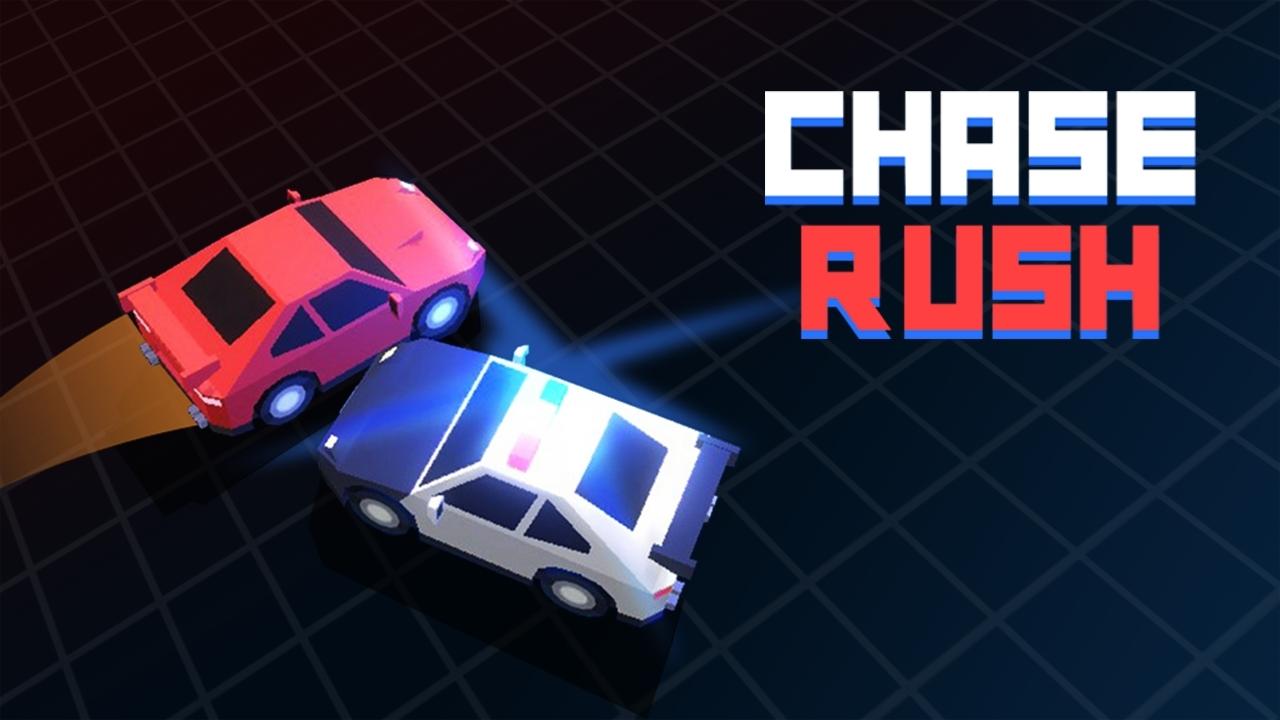 Chase Rush
 Smashy Road
 Driftio
 Night City Racing
 Hill Climb Racing
 Drift Hunters
 Smash Karts
 GT Cars Mega Ramps
 Motorcycle Racer Road Mayhem
 Funny Mad Racing