Launch the game — the rollercoaster train begins moving forward automatically.
Hold the control button to keep the train pressed against the track and maintain ground contact.
Release the button to launch the train into the air over gaps and obstacles.
High Score Tips
Treat the button more like a grip than a gas pedal — hold when you're on track surface, release when you need to clear an obstacle.
Land in the middle of track sections, not at edges — a centered landing gives you the most room to react to what comes next.
Err toward shorter jumps when you're unsure of the landing zone; under-jumping a gap is usually more recoverable than over-jumping into a wall.
Track Dash
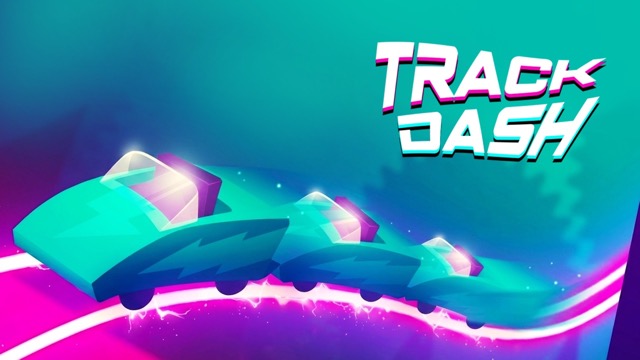
Play Track Dash online free at racing-limits.io. Track Dash is a 2D arcade game about riding a rollercoaster train across increasingly dangerous tracks — and keeping it from flying off into oblivion.
Track Dash is a 2D arcade game about riding a rollercoaster train across increasingly dangerous tracks — and keeping it from flying off into oblivion. The mechanic is brilliantly counterintuitive: holding the control button keeps the train on the track, while releasing it sends the train airborne. Survival depends on knowing when to let go, how long to stay in the air, and where to land — and the game tests that judgment with a track that gets nastier every second.
The core experience is built around momentum and timing. The train doesn't have a throttle or brakes in the traditional sense — it has grip and flight. Holding the button too long on a ramp sends you crashing into an obstacle you could have jumped. Releasing too early on a gap means you land short on nothing. The interplay between track contact and airtime creates a rhythm that players internalize over many runs, gradually developing an instinct for when the track is asking them to fly.
What keeps Track Dash engaging beyond the mechanical depth is its progression structure. The track evolves as your run extends, introducing new hazards — gaps, ramps, complex layouts, acid pits — that demand fresh adaptations. There's no ceiling to the difficulty; the game will always find a way to challenge even experienced players with a new configuration.
Minimalist visuals and instant restarts make it the kind of game you can lose an hour to without noticing, one run at a time. If you enjoy precision arcade games with a satisfying skill curve and genuinely surprising obstacle design, Track Dash delivers.
Key Details:
Genre
2D Arcade / Endless Runner
Difficulty Level
Medium–Hard (escalating)
Average Play Time
3–10 minutes per run
Best For
Players who enjoy momentum-based arcade challenges with a sharp skill curve
How to Play Track Dash?
Getting Started:
Launch the game — the rollercoaster train begins moving forward automatically.
Hold the control button to keep the train pressed against the track and maintain ground contact.
Release the button to launch the train into the air over gaps and obstacles.
Time your re-landing carefully to touch down safely on the track surface.
Adjust your hold and release timing as the track gets faster and more complex.
Basic Controls:
Hold Mouse Button / Control Button — Keep the train on the track
Release — Launch the train into the air
Objective: Travel as far as possible without crashing. Use the hold-and-release mechanic to navigate gaps, ramps, and obstacles. Flawless landings and well-timed jumps earn points and extend your run. Any harsh collision or missed landing ends the run immediately.
Track Dash Game Features & Highlights
Inverted control scheme — holding keeps you grounded, releasing sends you airborne — creates an instantly distinct feel
Escalating track hazards, including gaps, ramps, acid pits, and complex multi-obstacle sequences
Momentum-based physics that reward players who use the train's speed intelligently rather than reactively
Endless format with no fixed endpoint, so every personal best is a genuine achievement
Minimalist visuals and fast restart loop that make repeat attempts feel frictionless
Track Dash Tips & Strategies
Beginner Tips:
Treat the button more like a grip than a gas pedal — hold when you're on track surface, release when you need to clear an obstacle.
Land in the middle of track sections, not at edges — a centered landing gives you the most room to react to what comes next.
Err toward shorter jumps when you're unsure of the landing zone; under-jumping a gap is usually more recoverable than over-jumping into a wall.
Advanced Strategies:
Use ramps as information — the angle of a ramp tells you the intended airtime. Steeper ramps signal longer jumps; shallower ones suggest quick hops.
Develop a sense for speed-to-airtime ratio: at higher speeds, the same release duration sends you much further. Recalibrate your timing as pace increases rather than using fixed inputs.
In multi-hazard sequences, plan the whole sequence before executing the first input, not one obstacle at a time.
What to Watch Out For:
Holding through a ramp is a frequent mistake — the train gets launched at an extreme angle and crashes on re-entry. Release just before hitting a ramp to control your own airtime rather than letting the ramp dictate it.
Acid pits are particularly punishing because they offer no partial landing — any contact is a run-ender. Give yourself extra airtime buffer when you see them coming.
Track Dash Game Elements Explained
The Hold & Release Mechanic
Track Dash's entire design pivots on a single mechanical inversion: most games have you hold to act, but here, holding is the passive state (staying on track) and releasing is the active decision (going airborne). This means the game trains a specific kind of judgment — not reaction speed, but anticipatory release timing. A player who releases reactively when they see a gap will always be slightly behind the curve; the gap needs to be cleared before the train reaches it, meaning the release decision has to happen in advance. The window between "too early" (landing short in the gap) and "too late" (running into the far wall) varies by the gap's width and the train's current speed. Understanding that window — and how it shifts as the game accelerates — is the primary skill Track Dash develops over a player's session history.
Obstacle Progression & Track Evolution
The track in Track Dash is not static. As your run extends, the hazard complexity increases through a layered escalation: simple gaps appear first, then ramps, then combinations of both, then specialized hazards like acid pits that punish any contact. Each new hazard type introduced by the game requires a slightly different application of the hold-release mechanic. Ramps demand early releases; acid pits demand extended airtime; combined sequences require pre-planned multi-step inputs. The game uses this escalation deliberately — by the time a truly dangerous obstacle type appears, you've had enough exposure to the basic mechanic to attempt it, but not enough to handle it perfectly. This creates a perpetual learning state where skilled players are always being challenged at the edge of their current competency, which is the key ingredient in Track Dash's addictive replay loop.
Momentum & Scoring
Distance is the currency of Track Dash's score system, and momentum is what generates distance. The faster the train is traveling, the more ground it covers per second — but also the more punishing every timing error becomes. Holding this tension productively means recognizing that speed is an asset as long as your inputs are calibrated to it, and a liability the moment they aren't. Points accumulate passively as you travel, with no explicit bonus for stylish play, which keeps the strategy clean: survive longer, score higher. Flawless sequences of landings also extend your run without momentum interruption, which compounds over time into significantly greater distances than runs that involve near-misses and rough recoveries. In Track Dash, consistency beats flash every single time.
Track Dash Frequently Asked Questions
Q: How do I control the train in Track Dash? A: Hold the mouse button (or control button on mobile) to keep the train on the track. Release to send it airborne. The goal is to manage when you're grounded versus when you're in the air to clear obstacles and gaps safely.
Q: What should I do if I keep crashing on gaps? A: Identify whether you're landing short (releasing too late) or overshooting (releasing too early). Adjust your release timing before the gap appears, not when you're already at the edge. Practicing the timing by deliberately targeting easy gaps first helps calibrate your instincts.
Q: Is Track Dash compatible with mobile devices? A: Yes. The single-button mechanic works natively on touchscreen — tap and hold to stay grounded, release to jump. The game runs directly in mobile browsers without any downloads required.
Q: Can I save my progress in Track Dash? A: High scores and personal bests are tracked and saved between sessions automatically, so your records persist each time you return to the game.
Q: How do acid pits work, and how do I survive them? A: Acid pits are ground-level hazards that end your run on any contact — there's no partial landing or recovery. When you see one approaching, release early enough to gain sufficient airtime to clear the entire pit before descending. Give yourself more air margin than you think you need, especially at higher speeds.
Related Games Like Track Dash You Might Enjoy
If you like Track Dash, you might also enjoy:
Arcade Glide - It shares the same timing-first arcade design with one-button survival pressure.
Run 3 - It offers another momentum-heavy run where clean landings and route reads matter.
Slope 3 - It keeps the pace fast and punishes late reactions on dangerous tracks.

 Drift Frenzy
 Drift Rush
 Arcade Glide
 Track Dash
 Retro Rush
 Escape Road 3
 Wave Rider
 Traffic Road
 Escape Road City 2
 Bike Xtreme
 Escape Road 2
 Traffic Rally
 Tap Drift
 Drive Mad
 Wheelie Master
 Wheelie Party
 Moto X3M
 Street Wheelie
 Car Chaos
 Escape Drive
 Blocky Rider
 Mad Pursuit
 Mad Racers
 Chase Rush
 Smashy Road
 Driftio
 Night City Racing
 Hill Climb Racing
 Drift Hunters
 Smash Karts
 GT Cars Mega Ramps
 Motorcycle Racer Road Mayhem
 Funny Mad Racing