Never stop — not even for a moment — a stationary vehicle in Escape Vehicles is surrounded quickly. Continuous forward movement is the fundamental survival requirement before any other technique applies. If you must slow, maintain any movement rather than stopping completely.
Use traffic as natural police interference — civilian vehicles in the environment create obstacles that pursuing police must navigate around as well as you do. Routes through traffic clusters create brief separation windows; routes through open space give police unobstructed access to close the gap faster.
Directional variety is more valuable than speed alone — a car moving in a straight line at high speed is easier for police to intercept than the same car making frequent direction changes at moderate speed. Combine speed with direction variety to prevent police from establishing intercept angles ahead of your route.
Escape Vehicles
Play Escape Vehicles online free at racing-limits.io. Jump into instant browser gameplay with no downloads.
Escape Vehicles is a police escape driving game for players who want the core chase experience without complications: drive hard, stay ahead, upgrade the car, repeat. The police pursuit starts immediately and never relents — there's no grace period, no map tutorial, no introductory level where the cops are easy. The moment you're in the vehicle, the chase is on, and your skill and your car's capability are the only things keeping the run alive.
The upgrade system is what gives each run lasting consequence. Every escape — regardless of distance — earns the resources that incrementally improve the car's ability to escape further next time. A short run that earns enough for a meaningful upgrade can be more valuable to the game's long arc than a slightly longer run that earns barely anything. This creates a specific relationship with each session: you're not just surviving the current run, you're building toward the vehicle that makes future runs viable at difficulty levels the current car can't sustain.
What Escape Vehicles does well is keeping the formula tight. Speed racers who want the police escape experience without menu complexity, narrative framing, or mechanical layering get exactly that — a fast car, persistent police, and the clear objective of staying ahead as long as possible. The #1 action game claim for speed racers is a promise the game keeps through focus rather than through feature count.
Key Details:
Genre:
Police Escape / Action Racing
Difficulty Level:
Medium–Hard
Average Play Time:
5–10 minutes per run
Best For:
Players who want the police escape driving experience in its most focused form — fast, immediately challenging, and driven by upgrade progression
How to Play Escape Vehicles?
Getting Started:
Begin moving immediately — police pursuit is active from the run's first second, and a stationary vehicle is a captured vehicle.
Use your steering controls to navigate through the environment, maintaining forward momentum as your primary survival tool.
Avoid collisions with police vehicles, environmental obstacles, and civilian traffic — significant contact ends the run.
Collect resources during the run that fund car upgrades between sessions.
Invest earned resources in vehicle performance improvements — speed, handling, and durability each affect how the next run plays out.
Basic Controls:
Input
Action
[Steer Left / Right]
Navigate the escape route
[Accelerate]
Maintain forward momentum
[Brake]
Control speed in tight situations
Objective: Escape and survive police pursuit for as long as possible while collecting resources for car upgrades. Improve your vehicle across sessions to enable longer, more capable subsequent escapes. Drive hard, stay ahead.
Escape Vehicles Game Features & Highlights
Immediate police pursuit — the chase begins at the run's start with no warmup period; survival skill is tested from the first second
Upgrade-driven progression — every run contributes resources toward car improvements that meaningfully affect the next run's capability
High-speed action focus — the game strip-mines the police escape formula to its essential elements without padding or distraction
Escalating police pressure — pursuit difficulty increases as the run extends, ensuring long runs genuinely challenge developed skill
Short, replayable run format — fast restarts encourage immediate improvement attempts after each run ends
Escape Vehicles Tips & Strategies
Beginner Tips:
Never stop — not even for a moment — a stationary vehicle in Escape Vehicles is surrounded quickly. Continuous forward movement is the fundamental survival requirement before any other technique applies. If you must slow, maintain any movement rather than stopping completely.
Use traffic as natural police interference — civilian vehicles in the environment create obstacles that pursuing police must navigate around as well as you do. Routes through traffic clusters create brief separation windows; routes through open space give police unobstructed access to close the gap faster.
Directional variety is more valuable than speed alone — a car moving in a straight line at high speed is easier for police to intercept than the same car making frequent direction changes at moderate speed. Combine speed with direction variety to prevent police from establishing intercept angles ahead of your route.
Advanced Strategies:
Reserve braking for turns, not emergencies — braking in Escape Vehicles is most valuable as a precision tool for taking corners at the speed that the turn requires, not as a last-resort collision preventer when a police vehicle is already adjacent. Approach each corner with the braking already completed, not mid-corner where it disrupts your exit angle.
Learn which upgrade increments produce the most noticeable capability improvements — not all upgrade increments in a progression are equal. Some step changes produce clearly faster escape capability; others are incremental improvements without immediate impact. Identifying the threshold upgrades and prioritizing resources toward them produces more efficient progression than uniform incremental investment.
Use speed advantages on open terrain, directional advantages in dense terrain — in open areas with few obstacles, raw speed advantage over police creates the most effective separation. In dense environments with buildings and obstacles, sharp turns that police can't match at their current speed create separation that speed advantage alone doesn't produce. Match your escape approach to the current terrain character.
What to Watch Out For:
Coordinated police approaches from multiple directions — as the run extends, police don't only pursue from behind; they attempt to position ahead of your projected route and from the sides simultaneously. Consistent straight-line driving makes your projected route trivially predictable. Introduce enough directional variation that police can't reliably establish ahead-positioning.
Obstacle collisions during evasion maneuvers — aggressive evasive turns that avoid police vehicles can send you into environmental obstacles if the turn's exit angle isn't clear. The collision with the obstacle ends the run just as definitively as police contact. Confirm your turn's exit is clear before committing to the angle.
Escape Vehicles Game Elements Explained
Police Pursuit Escalation: Escape Vehicles' police pursuit is designed to consistently challenge whatever driving skill level the player currently has. Early in a run, police pursue with standard patterns — following from behind, attempting to close the gap at comparable speeds. As the run extends, additional units join and the pursuit coordination improves: vehicles position at angles designed to create a cordon, speeds increase, and the gap-closing rate becomes more aggressive. This escalation ensures that no single technique remains sufficient across an entire long run — the techniques that create separation at minute two are countered by minute five's pursuit quality, requiring continuous adaptation. Long runs are genuinely more demanding than short ones, which makes distance a reliable skill indicator.
Upgrade Economy: The resource economy in Escape Vehicles creates a session-to-session improvement arc where each run's performance contributes to the next run's capability. Resources collected during the escape — regardless of the run's ultimate length — fund car upgrades that improve the dimensions most relevant to escape performance: speed (creating distance faster), handling (navigating obstacles and direction changes more precisely), and durability (absorbing minor collisions that would otherwise end shorter runs). The upgrade system's design means that each run is never wasted — a short run that earns enough for a meaningful upgrade contributes as much to long-term capability as a longer run that earns marginally more but still below a significant upgrade threshold.
Speed Racer Identity: Escape Vehicles' "#1 action game for speed racers" positioning is a deliberate targeting of players who want the police escape driving experience in its most undiluted form. The game delivers speed, pursuit, and upgrade progression without narrative framing, mechanical layering, or alternative game modes that might diffuse the focus. This identity choice — giving speed racers exactly the chase experience they came for rather than a more complex game that includes that experience alongside other content — is what makes Escape Vehicles a specific recommendation for a specific player type rather than a general recommendation for all driving game players.
Escape Vehicles Frequently Asked Questions
Q: What ends a run in Escape Vehicles? A: Significant collision with police vehicles, environmental obstacles, or civilian traffic ends the run. Being fully cornered or caught by pursuing police also ends the run. The game has no time limit — runs continue until a collision or capture occurs.
Q: What should I upgrade first? A: Prioritize speed — the most direct escape improvement is covering more distance per second than police pursuit can close. Once speed upgrades make the police feel manageable, invest in handling for the directional precision that dense pursuit environments require, and then durability for absorbing the minor contacts that become unavoidable in extended high-speed escapes.
Q: How do I shake police that are directly adjacent? A: A sharp turn executed at a speed that causes the police vehicle to overshoot the corner creates immediate separation without requiring a speed advantage. Police vehicles that have committed to a direction take time to redirect — a sudden perpendicular turn exploits this commit-time. Exit the turn with acceleration to extend the gap before police complete their redirect.
Q: Is Escape Vehicles compatible with mobile devices? A: Escape Vehicles uses steering controls that may support touch input on mobile browsers — check the in-game control options for mobile-specific configurations. Desktop keyboard play provides the most reliable control for the precise directional changes that police evasion requires.
Q: Does the police pursuit get harder over time? A: Yes — pursuit difficulty escalates as the run extends. More units, better coordination, faster closure rates, and more effective cordon attempts all increase with survival duration. Techniques effective in the first minute of a run are progressively countered by the pursuit quality at minute three and beyond. Long runs genuinely require more developed evasion skill than short ones.
Related Games Like Escape Vehicles You Might Enjoy
If you like Escape Vehicles, you might also enjoy:

 Drift Frenzy
 Drift Rush
 Arcade Glide
 Track Dash
 Retro Rush
 Escape Road 3
 Wave Rider
 Traffic Road
 Escape Road City 2
 Bike Xtreme
 Escape Road 2
 Traffic Rally
 Tap Drift
 Drive Mad
 Wheelie Master
 Wheelie Party
 Moto X3M
 Street Wheelie
 Car Chaos
 Escape Drive
 Blocky Rider
 Mad Pursuit
 Mad Racers
 Chase Rush
 Smashy Road
 Driftio
 Night City Racing
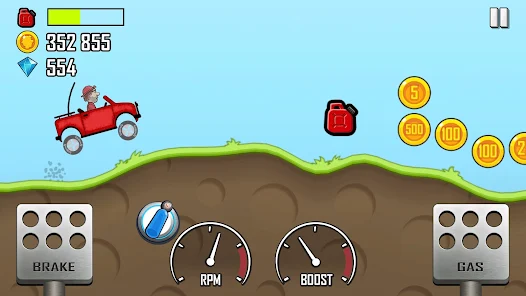 Hill Climb Racing
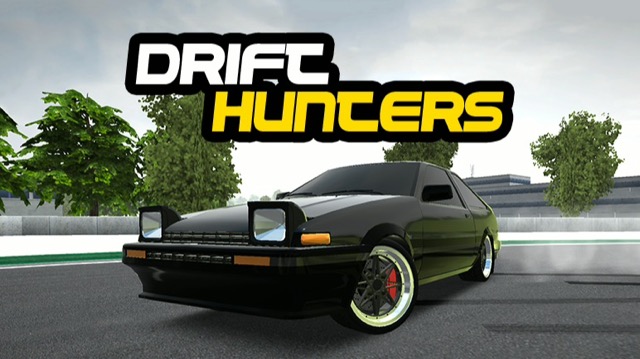 Drift Hunters
 Smash Karts
 GT Cars Mega Ramps
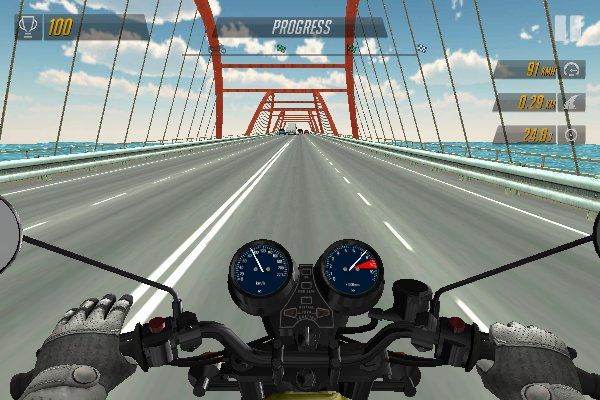 Motorcycle Racer Road Mayhem
 Funny Mad Racing