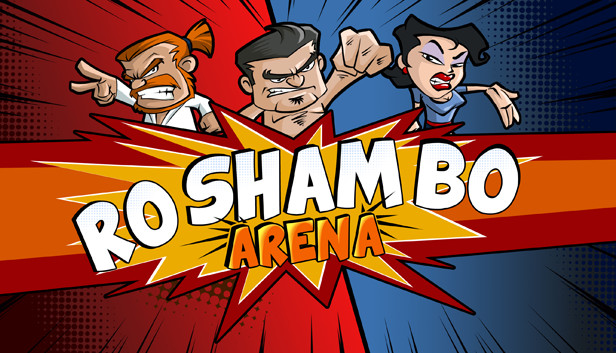
Choose your game mode — Single Player to compete against AI, or Two Player to challenge a friend on the same keyboard.
In Single Player, use J, K, or L keys to select Rock, Paper, or Scissors respectively when a round begins.
In Two Player, both players choose simultaneously — Player 1 uses A, S, D and Player 2 uses J, K, L .
High Score Tips
In two-player mode, watch for your opponent's habits over multiple rounds — most people have unconscious biases toward certain throws, particularly after wins or losses. A friend who just lost with scissors is statistically more likely to switch than to repeat the same throw.
Against the AI in single-player mode, avoid anchoring to recent results — if rock just won, that's no reason rock will win again. The AI's logic is designed to be unreadable, so treat each round as an independent probability decision.
First-round throws in two-player mode are your purest read of a opponent's default instinct — most people play their most comfortable throw when they have no information. Remember what it was.
Roshambo
Play Roshambo online free at racing-limits.io. Jump into instant browser gameplay with no downloads.
Roshambo brings the world's most universally known hand game to your browser in a clean, no-frills format that strips away everything except the decision and the result. Rock beats scissors. Scissors beats paper. Paper beats rock. First to three wins. The rules haven't changed since the first time you played on a playground, and that familiarity is exactly the point — Roshambo is instant to understand, requires no tutorial, and delivers the same satisfying rush of a winning call that it always has.
What makes the browser version worth returning to is the two-mode design. The solo mode pits you against an AI opponent whose decision-making logic is intentionally opaque — you can't read it the way you'd read a friend's habits, which means every round is a genuine exercise in probability thinking and gut instinct. The two-player mode is where Roshambo's hidden depth emerges: against a real opponent you know, pattern recognition becomes a legitimate strategy. People are creatures of habit. A friend who always opens with scissors under pressure, or who never plays the same throw twice in a row, is giving you information — and using that information is not cheating, it's playing well.
The keyboard-based input system is quick enough that the game never becomes about physical speed — it stays a decision game, which is what Roshambo always was. Whether you're filling two minutes between tasks, settling a real-world disagreement with a friend, or genuinely trying to develop a feel for probability-based decision-making, Roshambo on Racing Limits delivers the exact experience it promises: one of humanity's oldest and most satisfying casual competitions, available instantly, for free.
Key Details:
Genre:
Casual / Strategy
Difficulty Level:
Easy
Average Play Time:
2–5 minutes per session
Best For:
All ages; casual players looking for a quick, familiar game and pairs wanting a fast competitive format
How to Play Roshambo?
Getting Started:
Choose your game mode — Single Player to compete against AI, or Two Player to challenge a friend on the same keyboard.
In Single Player, use J, K, or L keys to select Rock, Paper, or Scissors respectively when a round begins.
In Two Player, both players choose simultaneously — Player 1 uses A, S, D and Player 2 uses J, K, L.
The first player to win 3 rounds wins the match.
A warning sound plays when both players make the same throw — that round is a draw and replayed.
Basic Controls:
Key
Action (Single Player)
Action (Two Player)
J
Rock
Rock (Player 2)
K
Paper
Paper (Player 2)
L
Scissors
Scissors (Player 2)
A
—
Rock (Player 1)
S
—
Paper (Player 1)
D
—
Scissors (Player 1)
Objective: Win 3 rounds before your opponent by choosing the throw that beats theirs. Rock beats scissors; scissors beats paper; paper beats rock. Simultaneous throws result in a draw — neither player scores and the round replays.
Roshambo Game Features & Highlights
Universal gameplay — no learning curve, no tutorial required; if you know rock-paper-scissors, you're ready to play
Two game modes — solo AI competition and local two-player head-to-head on the same keyboard
Opaque AI logic — the single-player AI's decision-making is intentionally unpredictable, preventing easy pattern exploitation
Draw detection with audio feedback — tied throws trigger a warning sound and automatic round replay
Instant play — no download, no account required; fully browser-based and available immediately
Roshambo Tips & Strategies
Beginner Tips:
In two-player mode, watch for your opponent's habits over multiple rounds — most people have unconscious biases toward certain throws, particularly after wins or losses. A friend who just lost with scissors is statistically more likely to switch than to repeat the same throw.
Against the AI in single-player mode, avoid anchoring to recent results — if rock just won, that's no reason rock will win again. The AI's logic is designed to be unreadable, so treat each round as an independent probability decision.
First-round throws in two-player mode are your purest read of a opponent's default instinct — most people play their most comfortable throw when they have no information. Remember what it was.
Advanced Strategies:
The loss-to-win psychology flip: After losing a round, most casual players change their throw rather than repeating it. If your opponent just lost with paper, they're less likely to play paper again — which means scissors becomes a riskier call and rock becomes a more interesting one.
Win conservation: After a player wins a round, they often stick with the winning throw — it feels lucky. If your opponent just beat you with rock, paper is statistically a sound next call, not just logically.
Randomization as a strategy: Against skilled opponents who are also reading your habits, deliberately randomizing — making choices with no pattern logic — removes the information they're using. Predictable unpredictability is still predictable; true randomness is harder to counter.
What to Watch Out For:
Your own patterns — the habits you're watching for in your opponent exist in your own throw selection too. After a few rounds, a perceptive opponent may be reading you as clearly as you're reading them.
Overcomplicating it — Roshambo is ultimately a probability game with a small sample size. Three rounds to win means variance matters enormously, and even a perfect probability read can lose to a lucky sequence. Play your best read, accept the variance.
Roshambo Game Elements Explained
Single Player AI Mode: The single-player AI in Roshambo is designed to resist pattern exploitation by maintaining unpredictable throw selection logic. Unlike a human opponent whose habits you can observe and read over time, the AI's decision-making doesn't settle into exploitable sequences — each round presents a fresh probability challenge rather than a readable behavioral pattern. This makes the single-player mode a genuine test of probability intuition and composure under uncertainty rather than a pattern recognition exercise. For players who want to develop their general Roshambo instincts before competing against a known human opponent, the AI provides consistent, readable resistance without the psychological dimension of a real opponent's tendencies, tells, or reactions to pressure.
Two-Player Mode: The two-player mode is where Roshambo's strategic dimension fully emerges. Both players input their throws simultaneously using separate keyboard sections — Player 1 with A-S-D and Player 2 with J-K-L — eliminating any reaction-time advantage and keeping the game purely about decision quality. Against a known opponent, the meta-game of Roshambo opens up: throw selection is influenced by the opponent's history of choices, their response patterns to winning and losing rounds, their first-round tendencies, and the psychological pressure of a close match score. None of this information is available against an AI; all of it is available against a friend you know well. Two-player Roshambo on the same keyboard is the format that most closely replicates the full social and strategic experience of the original game — including the conversation, the trash talk, and the satisfying finality of a best-of-three decided in the last possible round.
Draw & Replay System: Roshambo handles tied throws — both players selecting the same option — through an automatic draw detection and replay system. A warning sound signals the draw, and the round replays immediately without either player scoring. This mechanic preserves the match's momentum and removes any ambiguity about whether a tie counts as a partial point or requires negotiation. From a strategic perspective, a draw is genuinely neutral information — it confirms that both players chose the same throw, which is itself a data point about your opponent's thinking in that specific moment of the match. Whether a draw indicates synchronized habits or pure coincidence is a judgment call that adds a small but real layer of post-draw decision complexity.
Roshambo Frequently Asked Questions
Q: How do I win in Roshambo? A: Be the first player to win 3 rounds. Rock beats scissors, scissors beats paper, paper beats rock. If both players throw the same option, it's a draw — the round replays with no score change.
Q: What should I do if I can't beat the AI? A: The AI is designed to be unpredictable, so pattern-based strategies are less effective than in human-vs-human play. Focus on probability: since there are three options and the AI avoids obvious patterns, each throw is approximately a one-in-three probability event. Play your gut, accept variance, and aim to win the match rather than predict individual rounds.
Q: Is Roshambo compatible with mobile devices? A: Roshambo uses keyboard controls (A-S-D and J-K-L), making it best suited for desktop and laptop play. Mobile play requires a connected external keyboard for the full input experience.
Q: Can I play Roshambo against a friend online? A: The current two-player mode is a local format — both players share the same keyboard. Online head-to-head against a friend in a separate location is not currently available in this version.
Q: Is there any way to improve at Roshambo against a human opponent? A: Yes — observe your opponent's throw patterns across rounds, particularly their responses after wins and losses. Most players unconsciously repeat winning throws and switch away from losing ones. Noticing these tendencies before your opponent notices yours is the primary skill advantage available in competitive Roshambo.
Related Games Like Roshambo You Might Enjoy
If you like Roshambo, you might also enjoy:
Black Holeio - It is another easy-to-start browser game with strong replay value.
Wormateio - It is another easy-to-start browser game with strong replay value.
No Limits - It is another easy-to-start browser game with strong replay value.

 Drift Frenzy
 Drift Rush
 Arcade Glide
 Track Dash
 Retro Rush
 Escape Road 3
 Wave Rider
 Traffic Road
 Escape Road City 2
 Bike Xtreme
 Escape Road 2
 Traffic Rally
 Tap Drift
 Drive Mad
 Wheelie Master
 Wheelie Party
 Moto X3M
 Street Wheelie
 Car Chaos
 Escape Drive
 Blocky Rider
 Mad Pursuit
 Mad Racers
 Chase Rush
 Smashy Road
 Driftio
 Night City Racing
 Hill Climb Racing
 Drift Hunters
 Smash Karts
 GT Cars Mega Ramps
 Motorcycle Racer Road Mayhem
 Funny Mad Racing