Complete the tutorial before anything else — Doom Rider's one-button system is simple to describe and non-obvious to apply. The tutorial explicitly teaches the tap/hold mechanic against real obstacles; completing it provides the foundational understanding that the first proper obstacles require.
Short taps for small rotations, longer holds for sustained drift — the tap duration controls the rotation magnitude. Developing the sensitivity to distinguish between the short tap that produces a small directional adjustment and the hold that initiates sustained drift is the first mechanical skill the game requires.
Collect every gift that's safely reachable — power-ups including shields, speed boosts, and weapons are critical for both enemy sections and boss encounters. Gifts that require a minor routing detour are worth the cost; gifts that require hazard-contact to reach are not.
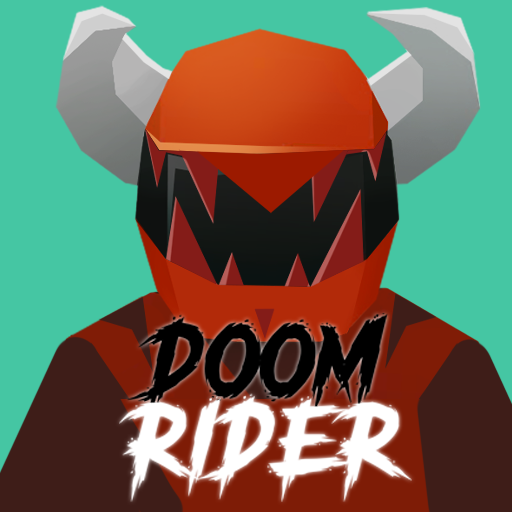
Doom Rider
Play Doom Rider online free at racing-limits.io. Jump into instant browser gameplay with no downloads.
Doom Rider is a one-button arcade driving game set in a skeleton-infested world where the challenge is survival through precise timing rather than complex controls. The skeleton king has cursed you; the only escape is forward — through obstacle-filled tracks across land, air, and sea, against enemies who block your path, and eventually toward the boss fight that can break the curse. Everything runs on a single button: tap to rotate, hold to drift. The simplicity is the design. The timing is everything else.
The skeleton-infested world setting gives Doom Rider a distinctive visual personality that separates it from standard driving game aesthetics. The enemies you encounter aren't traffic vehicles or police cars but actual skeleton warriors; the hazards aren't road signs and barriers but lava, hard rocks, and cursed terrain. The game commits fully to its supernatural post-apocalyptic character, which makes the single-button mechanic feel appropriately dramatic — you're not just avoiding obstacles, you're fighting a curse with nothing but a motorbike and timing.
Checkpoints are the game's most player-friendly design element: crashes and deaths restart from the last checkpoint rather than the beginning, which makes Doom Rider's boss fights and difficult sections approachable without the frustration of losing extended progress on every failed attempt.
Key Details:
Genre:
Arcade Driving / Action
Difficulty Level:
Medium–Hard
Average Play Time:
15–30 minutes per session
Best For:
Players who enjoy one-button arcade games with boss fights, supernatural themes, and the specific precision challenge of a single-mechanic timing game
How to Play Doom Rider?
Getting Started:
Tap or click the screen to rotate your vehicle — the direction and timing of taps controls your trajectory.
Hold the tap to drift — sustained holds produce extended drift states for navigating specific terrain types.
Dodge obstacles by timing your taps to rotate away from hazards before contact.
Collect gifts (power-ups including shields, speed boosts, and others) scattered on the path.
Defeat skeleton enemies by dodging their attacks and using collected weapons; reach checkpoints and eventually defeat the Skeleton King.
Basic Controls:
Input
Action
Tap / Click
Rotate vehicle
Hold
Drift
Objective: Navigate through skeleton-infested obstacle tracks by mastering the single tap-and-hold mechanic. Defeat enemy skeletons and boss fights with weapons and timing. Reach checkpoints throughout the adventure to avoid restarting from the beginning after crashes.
Doom Rider Game Features & Highlights
One-button control mechanic — tap to rotate, hold to drift; all gameplay runs through precise timing of this single input
Checkpoint system — restarts from the last checkpoint rather than the level beginning after crashes
Boss fight progression — the Skeleton King provides a climactic challenge that requires accumulated technique and power-ups
Multi-environment adventure — land, air, and sea settings each with distinct hazard profiles
Power-up system — shields, speed boosts, and weapons collected as gifts throughout the adventure
Doom Rider Tips & Strategies
Beginner Tips:
Complete the tutorial before anything else — Doom Rider's one-button system is simple to describe and non-obvious to apply. The tutorial explicitly teaches the tap/hold mechanic against real obstacles; completing it provides the foundational understanding that the first proper obstacles require.
Short taps for small rotations, longer holds for sustained drift — the tap duration controls the rotation magnitude. Developing the sensitivity to distinguish between the short tap that produces a small directional adjustment and the hold that initiates sustained drift is the first mechanical skill the game requires.
Collect every gift that's safely reachable — power-ups including shields, speed boosts, and weapons are critical for both enemy sections and boss encounters. Gifts that require a minor routing detour are worth the cost; gifts that require hazard-contact to reach are not.
Advanced Strategies:
Boss fight timing is specific, not reactionary — the Skeleton King's attacks follow patterns that can be learned across attempts. Each attempt where you reach the boss and observe a new attack pattern is information for the next attempt. Approach boss fights as pattern learning exercises rather than pure reflex challenges.
Drift sections require sustained hold pressure — sections that specifically require the drift mechanic (held input) rather than tapping respond poorly to tap-based input. Identify drift-required sections from their visual or mechanical signature and commit to the hold before entering rather than tapping mid-section.
Shield power-ups extend your mistake budget significantly — a shield absorbed hit means one less restart from checkpoint. In sections with dense hazards, prioritizing shield collection before entering the hazardous section rather than navigating hazards unshielded is the most reliable approach to checkpoint-to-checkpoint progress.
What to Watch Out For:
Lava and rock hazards requiring rotation before proximity — some hazards in Doom Rider don't allow last-moment reaction because the rotation required to avoid them takes time to develop. Identify hazards from further away than feels necessary and initiate the rotation early.
Enemy skeletons timing attacks to your approach — skeleton enemies don't just stand in your path; they time attacks relative to your approach. Arriving at enemy sections faster doesn't necessarily help if faster arrival means arriving into an attack that standard approach timing would have avoided.
Doom Rider Game Elements Explained
One-Button System: Doom Rider's entire control vocabulary lives in a single input — tap or hold. Tapping produces rotation: a brief rotation in a direction determined by the timing and vehicle's current state. Holding produces drift: a sustained slide that allows navigation of specific terrain types and evasion of pursuit-style threats. The challenge of a single-button system is that all nuance must come from timing variations rather than from multiple distinct inputs — short taps versus long holds, isolated taps versus rapid successive taps, the timing of hold initiation relative to hazard positions. This extreme simplicity creates the game's specific kind of difficulty: not complex control execution, but precise timing of a simple mechanic across increasingly demanding obstacle configurations.
Checkpoint Architecture: Doom Rider's checkpoint system is a player-respectful design choice in an otherwise demanding game. Checkpoints distribute through each level at intervals that prevent extreme progress loss — crashing before the boss fight doesn't restart from the level beginning but from the last checkpoint, which is near enough to the boss fight to make re-reaching it reasonable. This design allows Doom Rider to be genuinely difficult (obstacle configurations and boss fights that require multiple attempts) without being discouraging (significant progress loss on every failure). The checkpoint system makes the game's harder sections feel like learnable challenges rather than insurmountable ones.
Boss Fight Design: The Skeleton King boss fight is Doom Rider's climactic encounter and the game's most pattern-dependent challenge. Boss attacks follow learnable sequences that become predictable across multiple attempts, which means each boss encounter is simultaneously a performance attempt and a pattern-learning opportunity. The power-ups accumulated throughout the adventure preceding the boss fight — particularly shields and weapons — are specifically valuable in the boss encounter, which incentivizes thorough gift collection during the approach sections. The boss fight structure, where each attempt teaches specific attack patterns and power-up timing, is the game's most replayable and satisfying single design element.
Doom Rider Frequently Asked Questions
Q: How do I control Doom Rider? A: The entire game uses one input: tap or click the screen to rotate your vehicle, and hold to drift. All navigation, obstacle avoidance, and enemy engagement runs through the timing of this single mechanic.
Q: What happens when I crash? A: You restart from the last checkpoint — not from the level beginning. This means progress is preserved between checkpoint milestones even when crashes occur. Reaching checkpoints is therefore as important as avoiding obstacles.
Q: How do I defeat the Skeleton King? A: Observe the Skeleton King's attack patterns across multiple encounters and time your dodges and weapon use to those patterns. Collect shield power-ups before the boss encounter to absorb hits during learning attempts. Each attempt provides pattern information that improves the next.
Q: Is Doom Rider compatible with mobile devices? A: Yes — Doom Rider's tap-to-rotate and hold-to-drift controls translate naturally to touchscreen input. Tap the screen to rotate and hold for drift. The game is fully playable on mobile browsers.
Q: What do the gift power-ups do? A: Gifts provide various power-ups including shields (absorb one hit), speed boosts (temporary velocity increase), and weapons (used against skeleton enemies). Collect gifts whenever they're safely reachable — they're especially valuable in enemy sections and the boss fight.
Related Games Like Doom Rider You Might Enjoy
If you like Doom Rider, you might also enjoy:
Black Holeio - It is another easy-to-start browser game with strong replay value.
Wormateio - It is another easy-to-start browser game with strong replay value.
Roshambo - It is another easy-to-start browser game with strong replay value.

 Drift Frenzy
 Drift Rush
 Arcade Glide
 Track Dash
 Retro Rush
 Escape Road 3
 Wave Rider
 Traffic Road
 Escape Road City 2
 Bike Xtreme
 Escape Road 2
 Traffic Rally
 Tap Drift
 Drive Mad
 Wheelie Master
 Wheelie Party
 Moto X3M
 Street Wheelie
 Car Chaos
 Escape Drive
 Blocky Rider
 Mad Pursuit
 Mad Racers
 Chase Rush
 Smashy Road
 Driftio
 Night City Racing
 Hill Climb Racing
 Drift Hunters
 Smash Karts
 GT Cars Mega Ramps
 Motorcycle Racer Road Mayhem
 Funny Mad Racing