Keep to the center lane as your default position — center positioning gives you the maximum lateral range to switch in either direction when an obstacle appears off to one side. Edge positions cut your dodge options in half before you've even read the obstacle.
Collect every heart you can reach safely — hearts are the difference between a run-ending fall and a run-continuing recovery. Treat them as a priority collection target whenever they appear on a lane that doesn't require dangerous repositioning to reach.
For collapsible floors, jump immediately when you recognize them — collapsible sections begin falling the moment you contact them. Recognizing them from approach distance and jumping before you land on them is safer than hoping you can jump off before they collapse under you.
Electron Dash
Play Electron Dash online free at racing-limits.io. Jump into instant browser gameplay with no downloads.
Electron Dash is a neon-lit endless runner set inside a futuristic tunnel where the floor isn't always there, the ceiling occasionally fires lasers, and every second of surviving farther is a direct expression of how well you've developed the specific skills the game rewards. You're not just reacting to obstacles — you're reading the tunnel ahead, choosing lanes proactively, and calculating jump timing with enough lead time to clear whatever's coming rather than guessing at the last possible moment.
The game's obstacle variety is what gives it lasting challenge. Collapsible brick floors require jump sequences that maintain momentum without landing on the falling sections. Unexpected gaps demand lane changes or committed jumps at specific points where the floor is still solid. Red lasers sweep across the tunnel on timing patterns that can be read and threaded but won't forgive guesses. Each obstacle type has its own logic, and learning that logic — what each hazard looks like from approach distance and what it specifically requires — is the skill development arc that makes Electron Dash genuinely rewarding to practice.
Hearts collected during runs provide a critical safety net: each heart allows you to continue if you fall out of the tunnel rather than ending the run immediately. This transforms them from simple score items into strategic priorities — a run that has collected multiple hearts is significantly more forgiving of the occasional mistimed jump in a difficult section than a run that's been ignoring them. Electron Dash is a game that respects both the player who wants maximum challenge and the one who wants to extend their run as far as possible, offering both through the same obstacle course with the heart mechanic bridging the two.
Key Details:
Genre:
Endless Runner / Reflex Platformer
Difficulty Level:
Medium–Hard
Average Play Time:
5–15 minutes per run
Best For:
Players who enjoy fast-paced endless runners with multiple obstacle types, lane management, and heart-based run extension mechanics
How to Play Electron Dash?
Getting Started:
Your explorer moves forward automatically — your inputs control lane changes and jumps only.
Press A/D or Left/Right Arrow keys to switch lanes and position yourself to avoid upcoming hazards.
Press W, Up Arrow, or Spacebar to jump over obstacles, gaps, and laser sweeps that require vertical clearance.
Collect hearts whenever they appear on the path — each heart allows you to survive one fall off the tunnel platform rather than ending the run immediately.
Focus your visual attention ahead of your character, not on the character itself — forward scanning provides the reaction time that looking at the current position doesn't.
Basic Controls:
Key
Action
A / Left Arrow
Switch Lane Left
D / Right Arrow
Switch Lane Right
W / Up Arrow / Space
Jump
Objective: Run as far as possible through the neon tunnel without falling off the platform or being struck by lasers. Collect hearts to build a survival buffer against falls. Your score reflects distance traveled and obstacles cleared — maximize both by reading the tunnel ahead and maintaining center positioning.
Electron Dash Game Features & Highlights
Three distinct obstacle types — collapsible floors, unexpected gaps, and sweeping red lasers each require different responses
Heart collection system — fall-survival buffers that transform hearts from optional collectibles to strategic priorities
Multi-lane positioning — three or more track lanes create a lateral positioning challenge alongside the vertical jump mechanic
Neon tunnel visual design — high-contrast visuals that support forward-scanning obstacle identification at speed
Forward-scanning gameplay — the game explicitly rewards tunnel-ahead observation over character-focused attention
Electron Dash Tips & Strategies
Beginner Tips:
Keep to the center lane as your default position — center positioning gives you the maximum lateral range to switch in either direction when an obstacle appears off to one side. Edge positions cut your dodge options in half before you've even read the obstacle.
Collect every heart you can reach safely — hearts are the difference between a run-ending fall and a run-continuing recovery. Treat them as a priority collection target whenever they appear on a lane that doesn't require dangerous repositioning to reach.
For collapsible floors, jump immediately when you recognize them — collapsible sections begin falling the moment you contact them. Recognizing them from approach distance and jumping before you land on them is safer than hoping you can jump off before they collapse under you.
Advanced Strategies:
Time laser sweeps with a slight early jump — red lasers that sweep at running height can be jumped, but the timing window is narrow. Jumping when the laser is still slightly further than your character position — rather than when it's directly adjacent — provides the most reliable clearance without requiring inch-perfect timing.
Use lane changes for gap navigation, not just obstacle avoidance — some gaps appear in only one or two lanes, leaving one lane with solid floor. Identifying which lane is safe from approach distance and switching before the gap arrives is significantly more reliable than jumping over a gap mid-approach.
Build a mental map of obstacle sequences — Electron Dash's tunnel generates obstacle patterns with some recurring sequences. After several runs, certain combinations begin to feel familiar. Treating the approach to a familiar sequence as semi-known rather than fully unknown builds confidence that improves execution reliability.
What to Watch Out For:
Compound obstacles that combine floor and laser threats — some tunnel sections place a collapsible floor and a laser in close proximity, requiring a specific sequence of actions rather than a single response. Identifying these compound situations from further ahead than single-obstacle hazards is critical — their complexity demands more preparation time.
Speed buildup reducing laser timing margin — the tunnel runs faster in the later stages of a strong run, which compresses the timing window for laser clearance. Laser timing that was comfortable at lower speed becomes tighter at higher speed without any change in the laser's pattern. Adjust your jump initiation point earlier at higher speeds.
Electron Dash Game Elements Explained
Three-Obstacle System: Electron Dash's three obstacle types — collapsible floors, gaps, and laser sweeps — each create a distinct challenge that requires a different response from the same basic movement toolkit. Collapsible brick floors look like solid ground but begin falling immediately on contact, requiring recognition at approach distance to jump before landing rather than after. Unexpected gaps are fixed-position floor absences that require either a jump to clear or a lane change to a solid adjacent lane — the choice depends on whether the gap spans all lanes or only some. Red laser sweeps are height-based hazards at or near running height that require either a timed jump to clear above the sweep or a timed duck/dash to pass below it, depending on the specific laser configuration. The game's design requires players to identify obstacle type at approach distance and select the correct response — mis-selecting the response for a specific obstacle type (jumping when you should dodge, dodging when you should jump) produces the same collision as a pure timing failure.
Heart System: The heart collection mechanic is Electron Dash's most important risk-mitigation system. Hearts appear in various positions throughout the tunnel — on the main running lane, in adjacent lanes requiring a brief switch, or in elevated positions requiring a jump to collect. Each collected heart provides one instance of fall survival: if you fall off the platform, rather than ending the run immediately, the heart activates and repositions you on the track to continue. This transforms heart collection from a passive score benefit into an active survival investment. A run with three hearts can survive three falls — falls that would each individually end a heartless run. The calculus becomes: how much positioning risk is acceptable to collect a heart given the current obstacle density? In low-obstacle sections, heart collection detours are cheap; in dense sections, chasing a heart into a dangerous lane position may cost more than the heart provides.
Lane Management System: The multi-lane structure in Electron Dash creates a continuous positioning challenge that runs parallel to the obstacle timing challenge. The center lane is universally recommended as the default position because it preserves maximum lateral response capability: a center-positioned player can switch left or right with equal ease. Edge-positioned players have essentially removed half their lateral response options before any obstacle has appeared. Beyond the default-to-center principle, lane management becomes the skill of reading which lane contains an upcoming obstacle and switching to a clear lane before the obstacle arrives — with enough time that the switch itself doesn't create a secondary problem by placing you in a different hazard's path. Developing the ability to switch lanes smoothly as a routine part of moving through the tunnel, rather than only as emergency collision avoidance, is the habit that produces the most reliable long runs.
Electron Dash Frequently Asked Questions
Q: What does collecting hearts do in Electron Dash? A: Each collected heart provides one instance of fall survival — if you fall off the platform, the heart activates and repositions you on the track to continue your run rather than ending it. Collect them whenever they're safely accessible; they're one of the most important strategic items in the game.
Q: What should I do when I see a red laser approaching? A: Jump using W, Up Arrow, or Spacebar to clear above the laser sweep. Time your jump when the laser is still slightly ahead of your position — jumping slightly early is safer than jumping at the precise last moment, as the window is narrow. If the laser sweeps at jump height rather than running height, stay low and pass under it instead.
Q: How do I handle collapsible floors? A: Identify them from approach distance and jump before you land on them — collapsible floors begin falling on contact, and you won't have time to jump off after landing. If you can't jump before contact, a lane change to an adjacent non-collapsible section is the alternative.
Q: Is Electron Dash compatible with mobile devices? A: Electron Dash uses keyboard controls (A/D/W, arrow keys, Space) and is best suited for desktop and laptop browsers. Mobile play requires a connected external keyboard for reliable lane-switching and jump inputs at game speed.
Q: Does the game get harder the further I run? A: Yes — Electron Dash's speed increases with distance, compressing the reaction windows for all obstacle types. Laser timing that was comfortable at early-run speed becomes tighter at late-run speed. Center positioning and forward scanning become even more critical as speed increases.
Related Games Like Electron Dash You Might Enjoy
If you like Electron Dash, you might also enjoy:
Dino Dash 3D - It has the same fast-restart arcade rhythm and rewards sharper timing.
Kawairun 2 - It has the same fast-restart arcade rhythm and rewards sharper timing.
Sprunki Phase 5 - It has the same fast-restart arcade rhythm and rewards sharper timing.

 Drift Frenzy
 Drift Rush
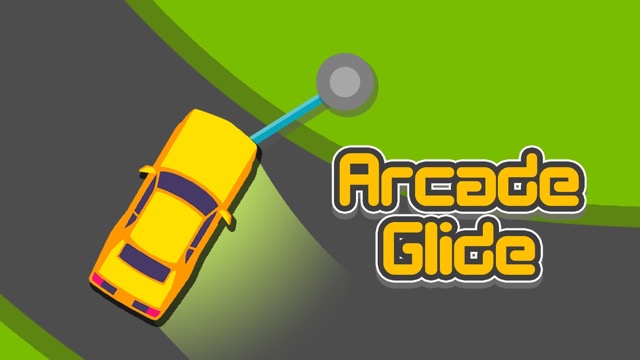 Arcade Glide
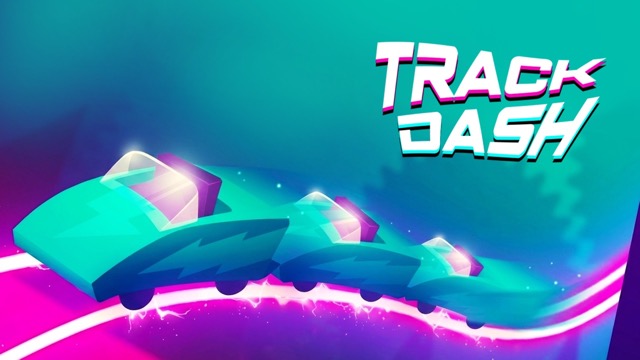 Track Dash
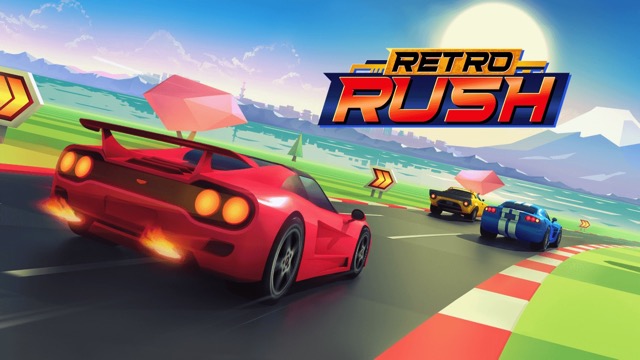 Retro Rush
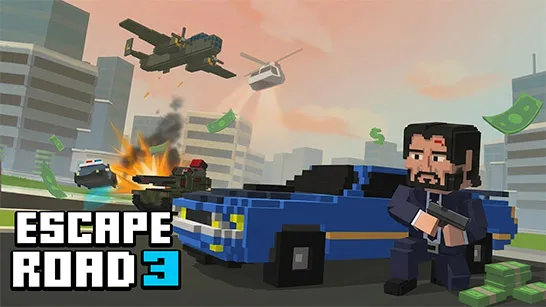 Escape Road 3
 Wave Rider
 Traffic Road
 Escape Road City 2
 Bike Xtreme
 Escape Road 2
 Traffic Rally
 Tap Drift
 Drive Mad
 Wheelie Master
 Wheelie Party
 Moto X3M
 Street Wheelie
 Car Chaos
 Escape Drive
 Blocky Rider
 Mad Pursuit
 Mad Racers
 Chase Rush
 Smashy Road
 Driftio
 Night City Racing
 Hill Climb Racing
 Drift Hunters
 Smash Karts
 GT Cars Mega Ramps
 Motorcycle Racer Road Mayhem
 Funny Mad Racing